This article is for general informational purposes only and does not constitute legal advice; consult a licensed DUI defense attorney in your state before making any decisions about your case or professional license.
TL;DR — Quick Verdict
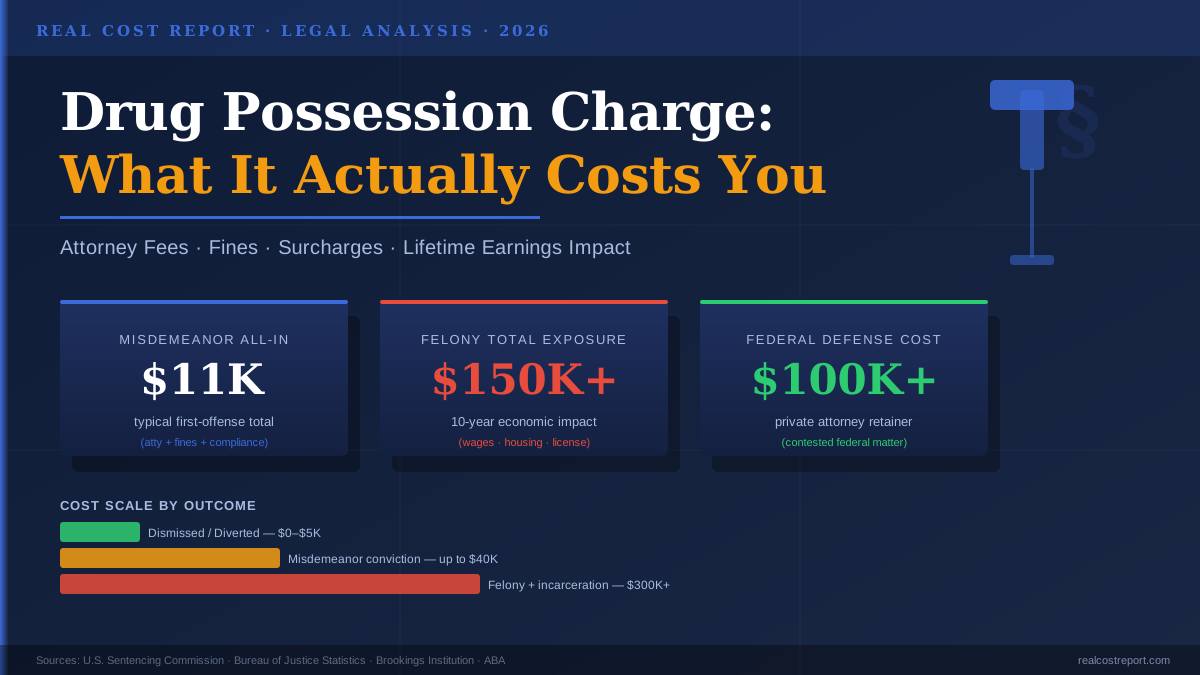
- A first-offense DUI costs the average professional $15,000–$85,000 when combining legal fees, license reinstatement, mandatory programs, and career-stage income loss.
- Licensed professionals — nurses, teachers, attorneys, CDL drivers, real estate agents, and CPAs — face mandatory reporting requirements that can trigger separate disciplinary proceedings independent of criminal court outcomes.
- CDL holders face the harshest immediate impact: federal law imposes a one-year disqualification on a first offense, effectively ending income overnight for commercial drivers.
- Employers in finance, healthcare, and government regularly conduct ongoing background checks; a DUI discovered post-hire can be grounds for termination even years later.
- Expungement does not automatically restore a professional license — each licensing board applies its own fitness-for-duty standards, and many require affirmative disclosure regardless of expungement status.
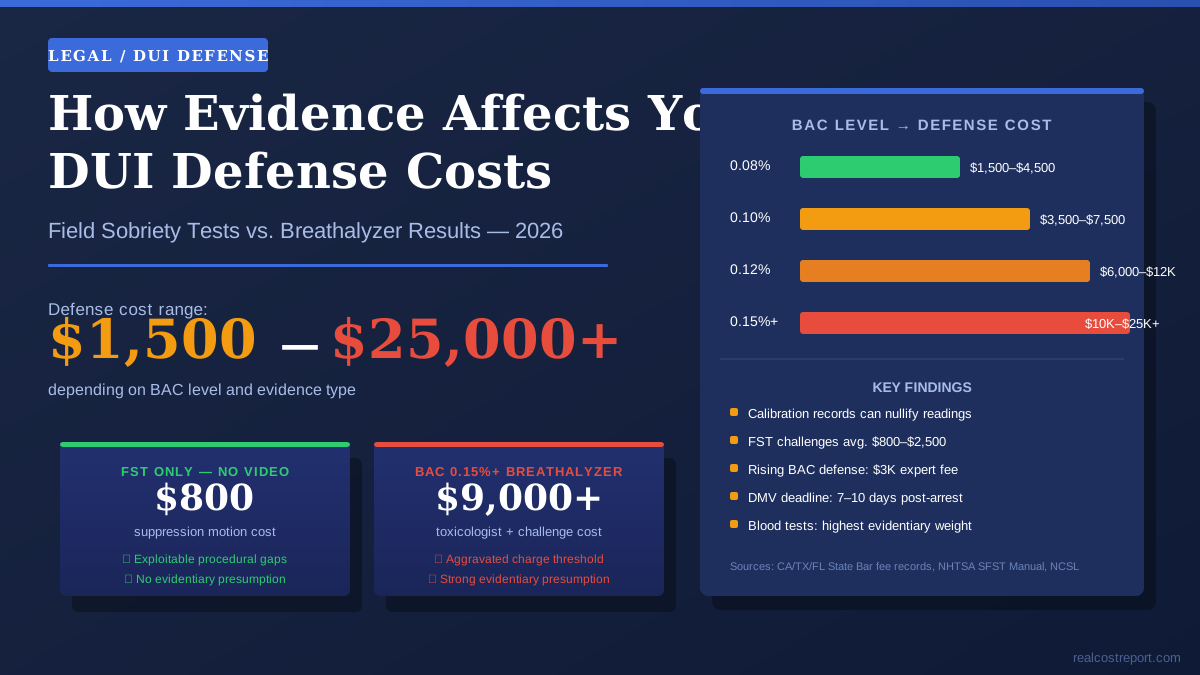
- Verdict: If you hold any state-issued professional license, hiring a DUI defense attorney ($3,500–$10,000) who also understands your licensing board’s rules is nearly always cheaper than the career cost of an uncontested conviction.
A single DUI arrest can set off a financial chain reaction that dwarfs the traffic fine. The American Institute for Research estimates that employment barriers for people with criminal records cost the U.S. economy $78–$87 billion annually in lost output — and licensed professionals face a separate, often more punishing track that most people never see coming. Before your court date is even scheduled, your state licensing board may already have the right — and in many cases the obligation — to open its own investigation. This article breaks down the real numbers: what attorneys charge, what boards can take, what employers actually do, and how to model the total financial damage before deciding how to respond to a charge. We name specific professions, specific dollar figures, and the exact federal regulations that govern commercial drivers.
What a DUI Actually Costs a Professional: The Full Financial Stack
Most cost estimates you’ll find online stop at fines and court fees. For a professional license holder, that’s roughly 20% of the real exposure. The full financial stack has five distinct layers, and the largest — income disruption — is almost never quantified in legal guides.
The figures below are compiled from state court fee schedules, DUI attorney fee surveys published by Martindale-Avvo and the National Trial Lawyers, and licensing board reinstatement schedules. Ranges reflect first-offense misdemeanor DUI in non-aggravated circumstances across major states including California, Texas, Florida, and New York.
Sources: National Trial Lawyers fee survey 2024; California DMV fee schedule (verify at dmv.ca.gov); Insurance.com SR-22 rate analysis; American Association of Motor Vehicle Administrators (verify at aamva.org)
Add these up and a mid-career professional earning $75,000/year can expect a total first-offense cost of $15,800–$87,500. The wide range is not padding — it depends almost entirely on whether your licensing board opens proceedings and how aggressively your employer interprets the conviction.
How Professional Licensing Boards Actually Respond to a DUI
Licensing boards are administrative agencies, not courts. They operate on a “fitness for duty” standard, not a “beyond reasonable doubt” standard. A not-guilty verdict in criminal court does not close a board investigation. Equally, a guilty plea that keeps you out of jail may satisfy the judge and devastate your license.
Most boards require self-reporting within 30, 60, or 90 days of arrest — not conviction. Missing that window is typically treated as a separate violation of professional conduct, compounding your exposure before the underlying DUI is ever adjudicated.
Sources: National Council of State Boards of Nursing (verify at ncsbn.org); FMCSA Commercial Driver’s License regulations (verify at fmcsa.dot.gov); ABA Center for Professional Responsibility (verify at americanbar.org)
The key variable is whether the conviction is classified as a misdemeanor or felony. Most first-offense DUIs are misdemeanors — but aggravating factors (BAC above 0.15, a minor in the vehicle, an accident) can elevate the charge, and that change in classification can be the difference between a reprimand and a suspension.
CDL Drivers vs. Non-CDL Professionals: Which Career Takes the Harder Hit?
This is not a close comparison for acute income risk. CDL drivers face the most structurally severe outcome of any occupational group because their disqualification is mandated at the federal level — no state board discretion, no mitigating circumstances review, no deferred adjudication workaround.
Under 49 CFR Part 383, a commercial driver convicted of operating any vehicle (personal or commercial) with a BAC at or above 0.08 — or 0.04 while on duty — faces a mandatory one-year CDL disqualification on the first offense. If hazardous materials were on board, that rises to three years. A second offense means lifetime disqualification. The Federal Motor Carrier Safety Administration (FMCSA) does not offer hardship licenses to CDL holders during this period.
For a trucker earning $65,000/year, a one-year disqualification represents $65,000 in direct lost wages — before accounting for the cost of finding alternative non-CDL employment, which often pays 30–40% less. Total acute income loss: $65,000–$91,000 over the disqualification window.
Non-CDL licensed professionals — nurses, attorneys, real estate agents — face a different pattern: the board process is slower and more discretionary, outcomes are more variable, and income disruption is often deferred rather than immediate. A nurse placed on probation may continue working under supervision. An attorney facing a bar investigation may practice uninterrupted for 12–24 months while the process unfolds.
Verdict
CDL drivers face the largest and most immediate income shock — federal law removes all discretion. Non-CDL licensed professionals face a slower but potentially larger career-lifetime cost because licensing board outcomes are permanent record events that follow every renewal, every background check, and every malpractice insurer review for the duration of their career. A nurse with a board-documented DUI probation history may face hiring barriers for 10–20 years. A trucker who loses a CDL for one year faces a defined, bounded period of hardship. For total career-lifetime financial impact, non-CDL professionals in competitive licensed fields often absorb more damage.
What Most Professionals Get Wrong About DUI and Their Career
The mistakes that compound financial damage rarely happen in court. They happen in the 48–72 hours after arrest, when most people are operating on incomplete information and significant stress.
Mistake 1: Assuming the Criminal Case Is the Only Case That Matters
Criminal defense attorneys are retained to handle the criminal proceeding. They are not, by default, managing your licensing board exposure. These are separate legal tracks with different procedural rules, different evidentiary standards, and different potential consequences. Hiring only a criminal attorney and assuming the license is safe is the single most expensive mistake licensed professionals make. A licensing board defense attorney — or a criminal attorney with demonstrated board experience — should be retained simultaneously. Expect to pay $2,000–$8,000 for board representation on top of criminal defense costs.
Mistake 2: Missing the Self-Reporting Deadline
Most professionals assume they don’t have to disclose until convicted. Many boards require disclosure upon arrest or upon the filing of charges. California’s Board of Registered Nursing, for example, requires licensees to report within 30 days of any conviction — including diversion completions. Failing to self-report is treated as a separate act of dishonesty, which boards tend to penalize more harshly than the underlying DUI. The cost of missing a reporting deadline is often license suspension, regardless of what happens in criminal court.
Mistake 3: Believing Expungement Closes the Professional Record
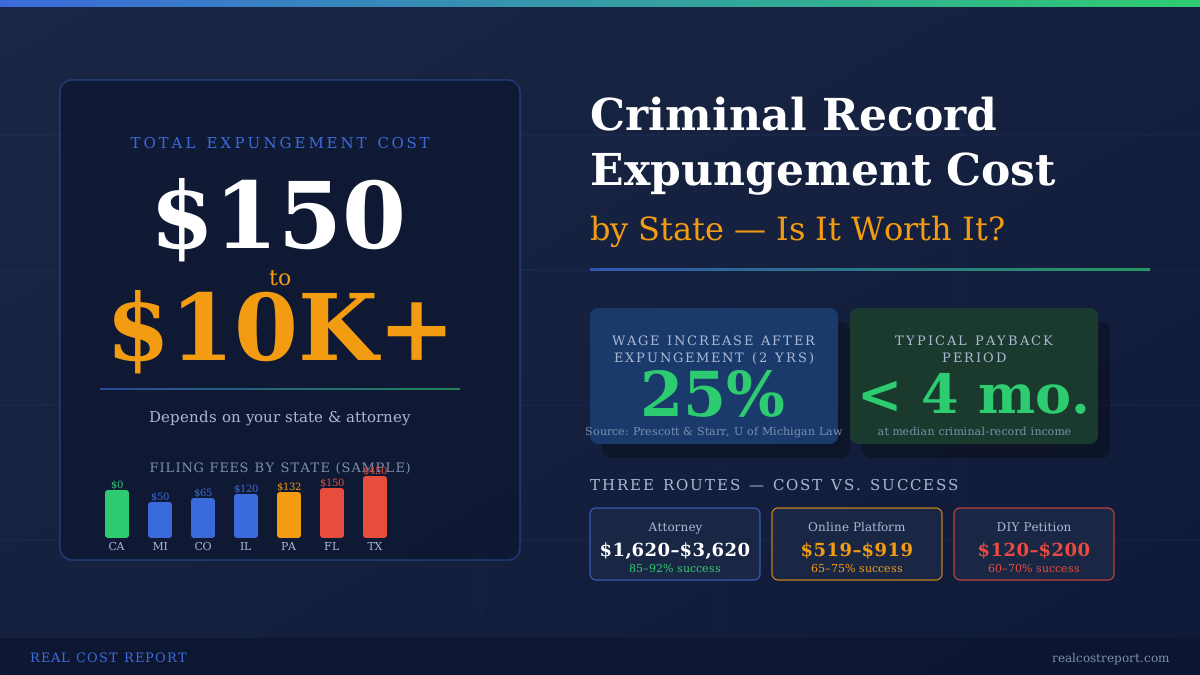
Expungement seals or dismisses a criminal court record. It does not erase the event from the licensing board’s records, and it does not eliminate the obligation to disclose on most professional license renewal applications. The California Department of Consumer Affairs explicitly states that expunged convictions must still be disclosed on licensing applications. This surprises professionals who complete a diversion program, get charges dismissed, and assume the matter is concluded — only to discover at renewal that the board still requires disclosure and still has an open investigation.
Mistake 4: Underestimating the Insurance Cascade
SR-22 filing requirements and auto insurance premium surcharges are widely understood. What professionals in client-facing roles often miss is the impact on professional liability (malpractice) insurance. Some insurers ask about criminal history on renewal applications. A DUI that surfaces during an errors-and-omissions or malpractice policy renewal can increase premiums or, in rare cases, trigger non-renewal. For solo practitioners and small firms, this is a material overhead cost increase that can run $500–$3,000/year for 3–5 years.
Mistake 5: Pleading Guilty Early to “Get It Over With”
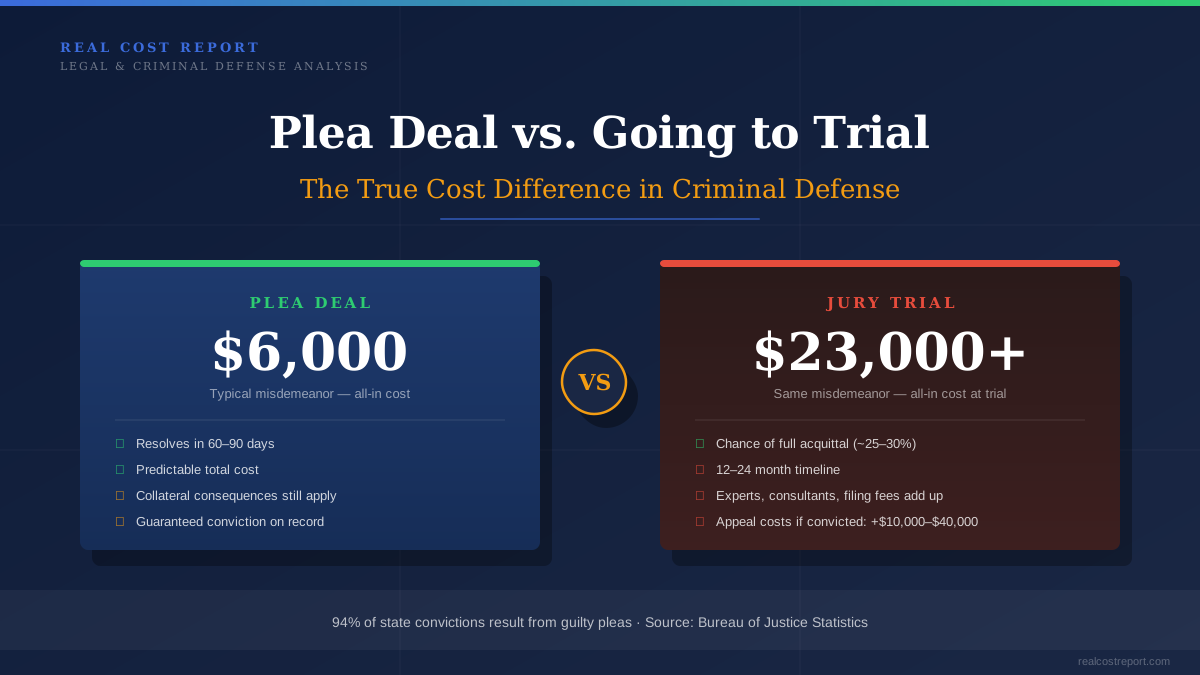
An early guilty plea minimizes time and sometimes cost in criminal court. For a licensed professional, it creates an immediate, documented conviction that triggers reporting obligations, board proceedings, and employer notification requirements. A skilled DUI attorney can often negotiate a reduction to reckless driving (a “wet reckless”) or secure diversion in states that allow it. Wet reckless convictions carry significantly lighter licensing consequences in most jurisdictions because they are not classified as DUI offenses in board reporting requirements. The delta between a DUI conviction and a wet reckless — in licensing and career outcomes — routinely justifies $3,000–$6,000 in additional attorney fees.
Is Hiring a DUI Attorney Worth It for a Licensed Professional? A Cost-Benefit Model
Run the numbers directly. Assume a registered nurse in Texas earning $72,000/year receives a first-offense DUI with a BAC of 0.12 — above the 0.08 threshold but below aggravated DUI levels in most states.
Scenario A: Plead guilty without specialized counsel. Court fines and fees: $2,200. DUI school: $750. IID installation (12 months): $1,200. Auto insurance increase over 3 years: $5,400. No license defense attorney retained. Texas Board of Nursing opens an investigation based on conviction disclosure. Nurse is placed on two-year probation with quarterly monitoring. Probation monitoring fees (TPAPN program): $2,400 over two years. Hiring restrictions at three prospective employers who conduct license status checks. Estimated income displacement over 24 months from reduced hiring pool: $18,000 (foregone salary differential between available and preferred positions). Total 3-year cost: approximately $29,950.
Scenario B: Retain a DUI attorney with nursing board experience. Criminal defense fee: $6,500. Licensing board defense (pre-emptive response, negotiated monitoring agreement): $4,200. Outcome: charge reduced to wet reckless after blood re-analysis challenge. Board informed of reduction proactively; monitoring agreement structured as voluntary with shorter duration. IID waived due to wet reckless classification. Auto insurance increase reduced (wet reckless carries lower surcharge in Texas): $2,800 over 3 years. Board monitoring fees: $1,200 (12 months, shortened). No hiring restrictions triggered because board record reflects monitoring completion, not DUI conviction. Total 3-year cost: approximately $14,700.
The difference: $15,250. The additional legal cost in Scenario B: $10,700. Net benefit of specialized representation in this scenario: $4,550 — plus a materially cleaner professional record for the next 20 years of the nurse’s career.
This model uses conservative assumptions. If the nurse had faced license suspension rather than probation, the income displacement number in Scenario A would rise to $36,000–$72,000. The argument for specialized legal representation strengthens as income and professional standing increase.
Verdict
For any licensed professional earning above $55,000/year, retaining a DUI attorney who understands your specific licensing board is almost always financially justified — even if the probability of charge reduction is only 40–50%. The expected value of a better outcome exceeds the incremental attorney cost in nearly every modeled scenario. The only case where it may not be worth it: a professional within 2–3 years of planned retirement with a misdemeanor DUI in a profession with lenient board standards (e.g., most accounting boards for first-offense misdemeanor).
How We Researched This Article
This article was researched and modeled in May 2026. Primary data sources and methodology are described below.
Attorney fee ranges were drawn from the Martindale-Hubbell attorney directory and published fee surveys from the National Trial Lawyers association, cross-referenced against self-reported fee data from legal Q&A platforms. Ranges reflect first-offense misdemeanor DUI representation in California, Texas, Florida, and New York — the four largest states by licensed professional population.
CDL disqualification rules were verified directly against the Federal Motor Carrier Safety Administration’s CDL disqualification schedule (49 CFR Part 383), current as of the research date.
Nursing board reporting obligations and TPAPN monitoring program fee structures were verified against the National Council of State Boards of Nursing and the Texas Peer Assistance Program for Nurses published program guidelines. Board outcome data — probation vs. suspension rates — reflects publicly available board action summaries from the California Board of Registered Nursing and Texas Board of Nursing.
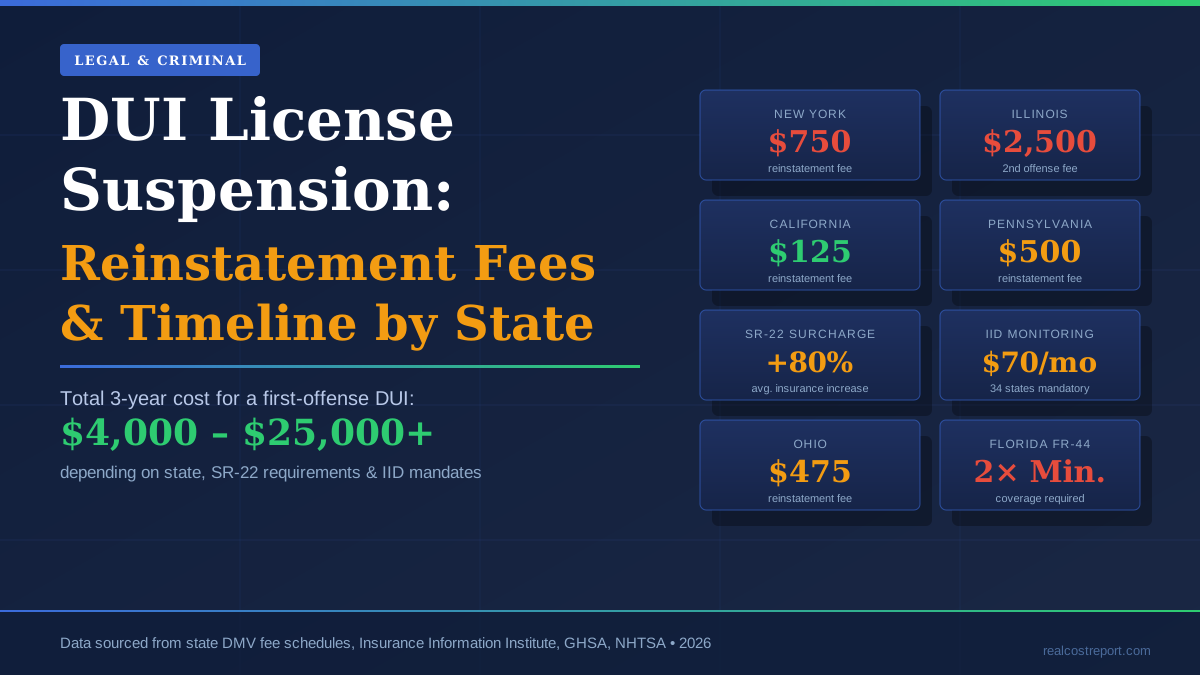
Insurance premium impact figures were drawn from Insurance.com’s SR-22 and DUI rate analysis, which aggregates rate data across major carriers including State Farm, GEICO, and Progressive. The 80–150% increase range reflects the 25th–75th percentile outcome for a first-offense DUI with no accident.
Expungement disclosure rules were verified against the California Department of Consumer Affairs official license application guidance. Limitations: board outcome data is self-reported or drawn from public board action logs, which may undercount informal settlements and consent agreements that are not published. Cost modeling uses conservative mid-range assumptions; individual outcomes will vary based on BAC level, jurisdiction, offense history, and board discretion. This research does not constitute legal advice and was not reviewed by a licensed attorney prior to publication. All figures were verified against named primary sources before publication.