This article is for informational purposes only and does not constitute legal advice; consult a licensed family law attorney in your jurisdiction before making any decisions about your divorce process.
TL;DR — Quick Verdict
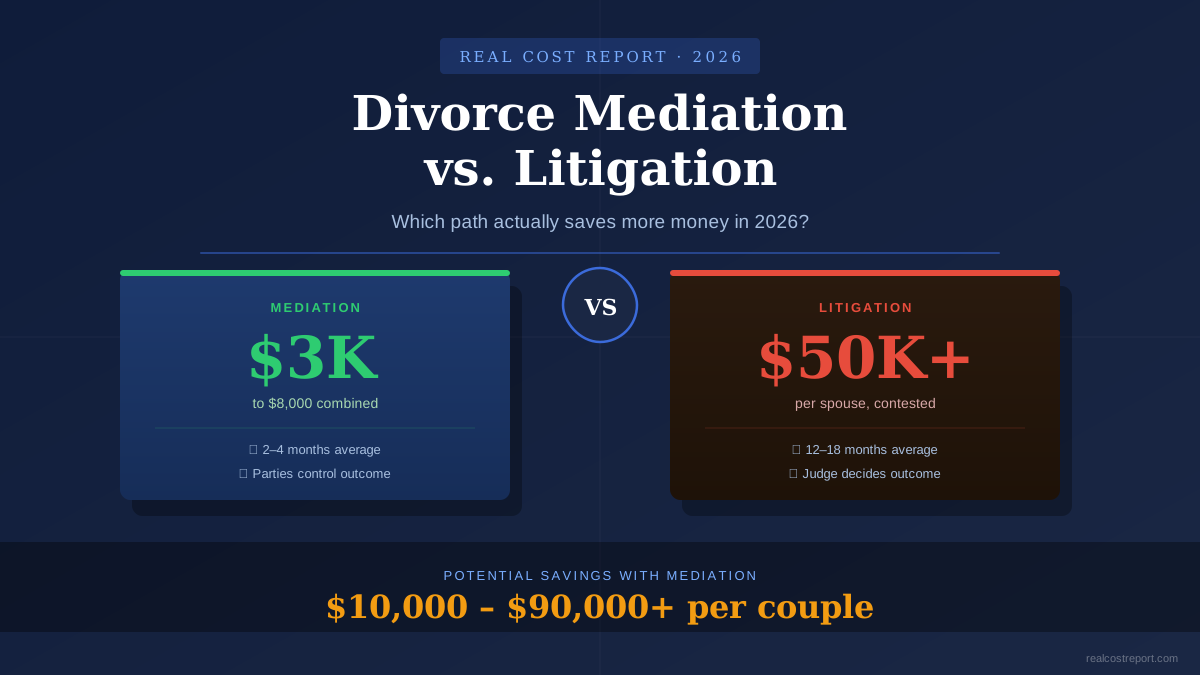
- Divorce mediation costs $3,000–$8,000 on average; contested litigation runs $15,000–$50,000+ per spouse — a difference of $10,000 to $40,000+ on the same dissolution.
- Litigation timelines average 12–18 months in contested cases; mediation typically resolves in 2–4 months.
- High-asset divorces involving business valuation, stock options, or multiple properties can see litigation costs exceed $100,000 per side — mediation with a financial neutral still typically costs under $20,000 combined.
- Mediation is not appropriate when domestic violence, severe power imbalances, or hidden asset suspicion exists — litigation’s discovery tools are the better protection.
- Collaborative divorce (a hybrid model) costs $25,000–$50,000 combined and sits between both options in cost, control, and conflict level.
- Verdict: For most divorcing couples without active safety concerns, mediation saves significantly more money and time — but only when both parties negotiate in good faith.
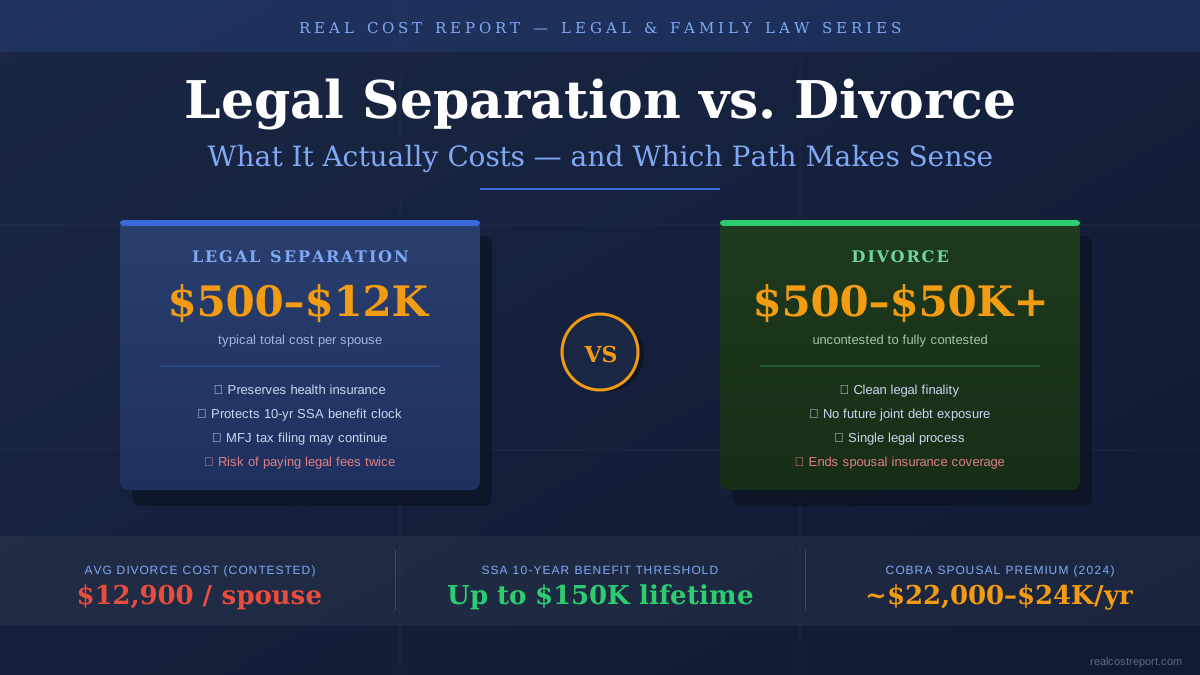
The average American divorce costs $12,900 in attorney fees alone, according to a survey published by Martindale-Nolo Research — and that figure climbs sharply the moment a case becomes contested. For a couple in their late 30s with a home, two retirement accounts, and a custody arrangement to negotiate, the fork between mediation and litigation isn’t just procedural: it can mean the difference between rebuilding financially within a year or spending three years in court while attorneys bill $350–$600 per hour. This analysis models exact cost scenarios for both paths, identifies which case types genuinely warrant litigation, and names the specific fee structures — from JAMS mediation rates to family court filing fees in high-cost states like California and New York — that most divorce guides gloss over. Two platforms worth understanding upfront: Hello Divorce (online mediation) and Wevorce both publish transparent pricing that anchors the lower end of the cost spectrum.
What Divorce Mediation Actually Costs in 2026: Full Fee Breakdown
Mediation pricing breaks into three distinct tiers based on mediator credential level, case complexity, and whether a financial neutral is added. A private mediator — typically a retired family court judge or certified family law specialist — charges $200–$600 per hour. Most straightforward divorces require 6–12 hours of mediation sessions, putting all-in mediator fees at $1,200–$7,200 before any attorney review costs.
The structure most mediators use: a flat retainer ($1,500–$3,000) covering intake, document review, and the first two sessions, then hourly billing thereafter. HelloDivorce charges $1,500–$3,500 for fully online-guided mediation on simple cases. Wevorce’s structured program runs $2,500–$7,500 depending on asset complexity. These are documented on their published pricing pages.
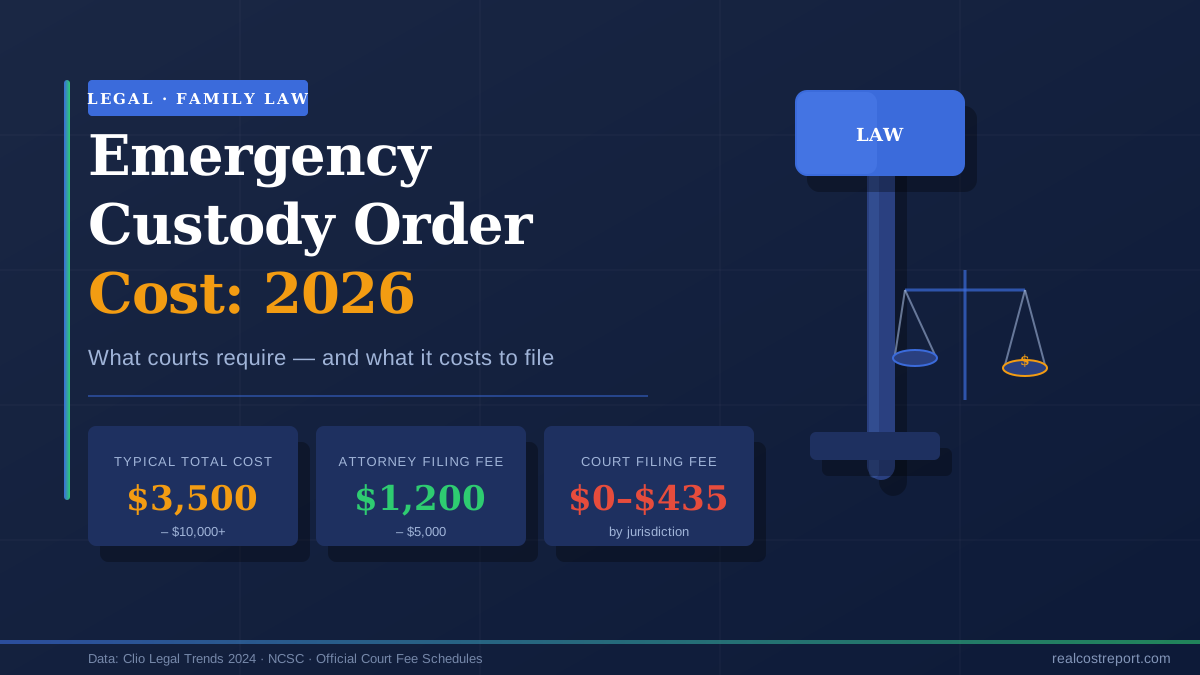
Add attorney review — strongly recommended — and costs increase by $500–$2,500 per spouse. A financial neutral (Certified Divorce Financial Analyst, or CDFA) runs $150–$300 per hour and adds $500–$2,000 for most cases. Court filing fees vary by state: California charges $435 for a petition; New York ranges $210–$335; Texas is $300–$350.
Sources: Martindale-Nolo Research divorce cost survey; HelloDivorce published pricing (verify at hellodivorce.com); Institute for Divorce Financial Analysts CDFA rate data (verify at institutedfa.com); state court fee schedules for CA, NY, TX.
What Contested Divorce Litigation Actually Costs: Attorney Fees, Expert Witnesses, and Hidden Expenses
Litigation costs are driven by attorney hours, and contested divorce is among the most hour-intensive legal proceedings in civil law. The American Academy of Matrimonial Lawyers (AAML) has consistently documented that contested divorces involving children or significant assets are the single largest driver of family law billing volume. Attorney hourly rates for family law specialists run $250–$650 in mid-sized markets and $450–$900+ in major metros (New York, Los Angeles, San Francisco, Chicago).
A contested divorce with child custody and asset disputes typically requires 40–100+ attorney hours per spouse. At a blended rate of $375/hour — realistic for a mid-market experienced family law attorney — that’s $15,000–$37,500 in fees per person before a single expert is retained. Add a forensic accountant ($200–$450/hr) for business or asset valuation, a child custody evaluator ($3,000–$8,000), and a vocational expert ($1,500–$4,000) and the per-spouse total climbs quickly past $50,000.
Sources: American Academy of Matrimonial Lawyers (verify at aaml.org); Martindale-Nolo Research 2023 divorce cost survey; National Association of Certified Valuators and Analysts rate data (verify at nacva.com).
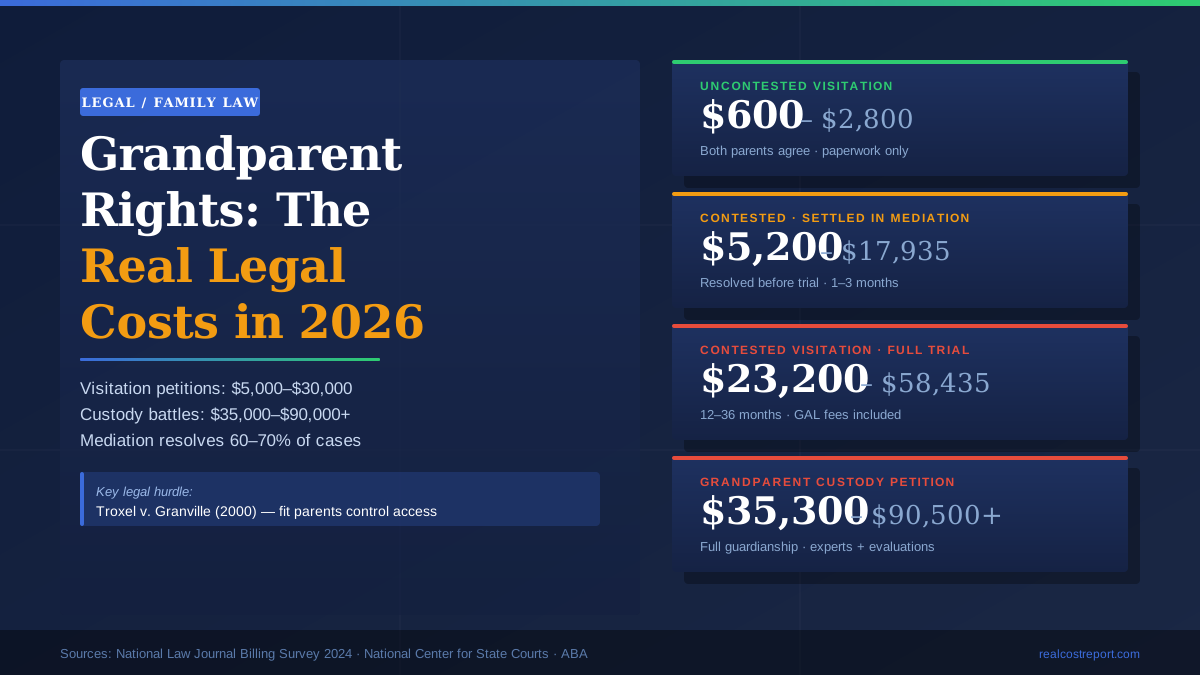
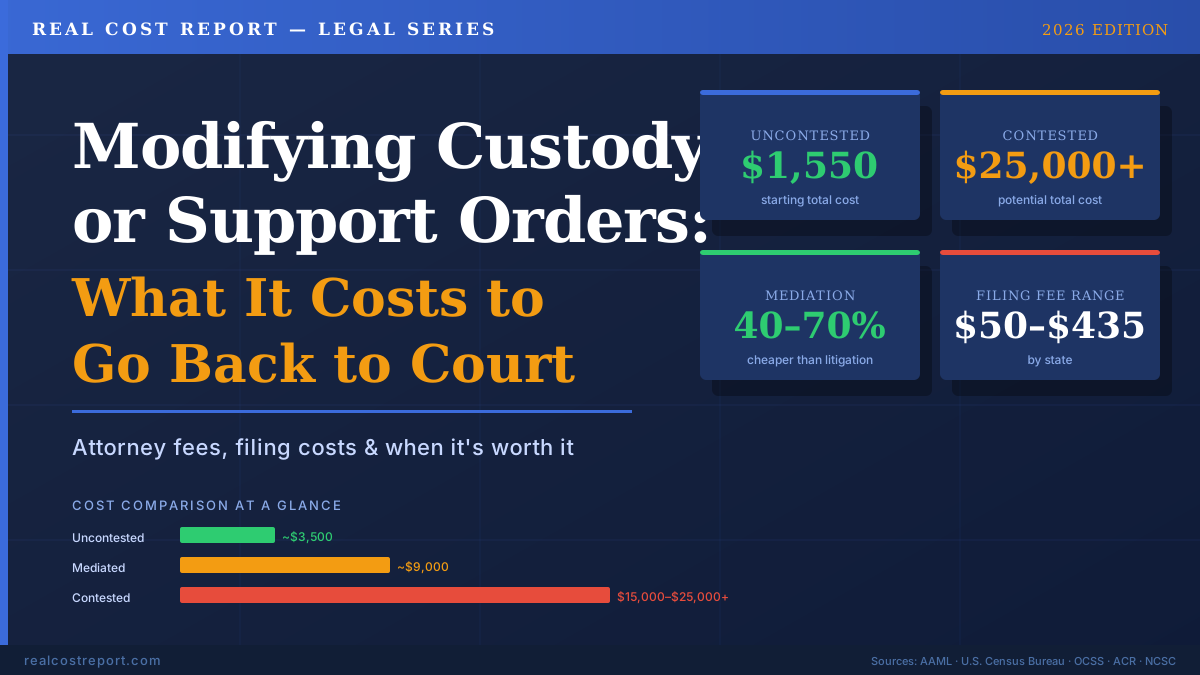
One cost attorneys rarely quote upfront: post-decree litigation. When a court-ordered arrangement fails — a common occurrence given that judges make custody and support decisions without deep knowledge of a family’s daily logistics — modification proceedings cost an additional $3,000–$15,000+ per motion. Mediated agreements have measurably lower modification rates, according to research cited by the Association for Conflict Resolution, because parties who negotiate their own terms comply at higher rates.
Mediation vs. Litigation: Which Is Better for Your Specific Divorce Situation?
The mediation-versus-litigation decision is not universal — it is conditional on the specific facts of the case. Five variables determine which path is financially and practically superior.
Scenario 1: Young couple, no children, two income earners, one joint account, rented apartment
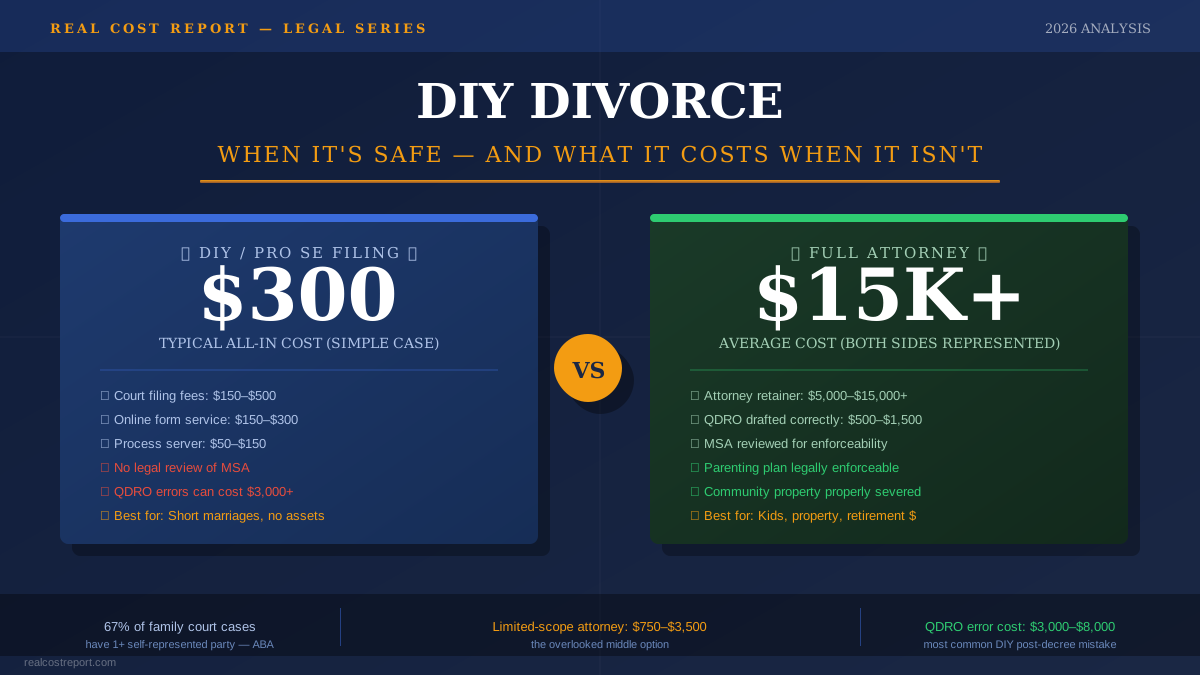
Mediation total cost: $1,500–$3,500 via HelloDivorce or Wevorce. Timeline: 4–8 weeks. Litigation for the same case: $8,000–$18,000 combined if attorneys are retained for an uncontested filing with minimal negotiation. There is no rational financial argument for litigation here.
Scenario 2: Married 14 years, two minor children, one spouse earns $190,000, other earns $42,000, marital home worth $680,000 with $310,000 equity, two 401(k) accounts
Mediation with a CDFA and attorney review per spouse: $12,000–$22,000 combined. Contested litigation: $60,000–$120,000 combined if custody becomes disputed. The equity gap in spousal income creates a real power imbalance — a skilled mediator addresses this by providing financial scenario modeling (net present value of pension vs. home equity, for example). A QDRO (Qualified Domestic Relations Order) to split the 401(k) adds $500–$1,500 in drafting fees under either path.
Scenario 3: 22-year marriage, one spouse owns a business (LLC, $2.1M estimated value), pension, real estate investment portfolio
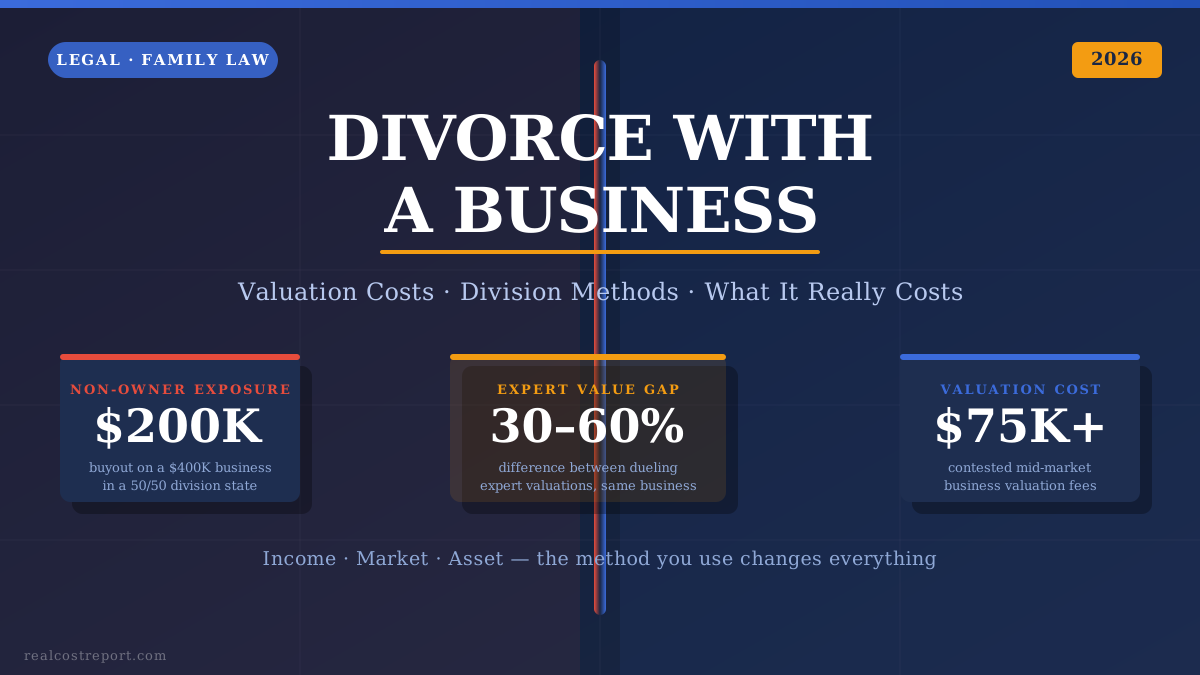
Business valuation forensic work is required regardless of path — $8,000–$25,000. Under mediation, the parties share one neutral appraiser. Under litigation, each side retains their own expert, doubling the cost. Mediation total: $25,000–$40,000. Litigation total: $80,000–$200,000+.
Verdict
Mediation delivers superior financial outcomes in Scenarios 1 and 2, and remains cost-competitive even in complex Scenario 3. Litigation is the appropriate default only when there is documented domestic violence, credible hidden-asset suspicion requiring subpoena power, or a spouse who refuses to participate in good-faith negotiation. For roughly 70–80% of divorcing couples, the data supports mediation as the financially rational first option.
What Most People Get Wrong About Divorce Mediation Costs
Five persistent misconceptions cause people to either overpay for litigation they didn’t need or enter mediation unprepared and fail — then pay for litigation anyway.
Mistake 1: Assuming mediation is always cheaper per hour than attorneys
A top-tier private mediator in a major metro charges $400–$600 per hour — comparable to or higher than many family law associates. The cost advantage of mediation comes from dramatically fewer total hours required, not from a lower hourly rate. Confusing the two leads people to abandon legitimate mediation services for cheaper, under-qualified mediators who lack the skill to resolve impasses, resulting in failed mediation and subsequent litigation costs on top of the wasted mediation spend.
Mistake 2: Skipping attorney review of the mediated agreement
Mediated settlement agreements are legally binding contracts. Errors in how marital property is classified, how support is calculated under state guidelines, or how a QDRO is drafted can cost tens of thousands of dollars in post-decree corrections. Attorney review at $500–$2,500 per spouse is one of the highest-ROI expenditures in the entire process.
Mistake 3: Treating mediation and litigation as mutually exclusive
Most contested divorces settle before trial — often after $20,000–$60,000 in combined attorney fees have already been spent. Court-annexed mediation is mandatory in many jurisdictions (California, Florida, and Texas all have provisions requiring mediation before trial). Starting with private mediation captures those savings before, not after, litigation costs accumulate.
Mistake 4: Not accounting for opportunity cost and emotional toll
Litigation averaging 12–18 months means 12–18 months of restricted financial decision-making (courts often issue automatic temporary orders freezing major financial moves), deferred asset division, and sustained high-cortisol stress documented in clinical literature as equivalent to job loss or serious illness. These costs are real but rarely appear in fee quotes.
Mistake 5: Assuming mediation fails for high-conflict cases
High-conflict does not automatically equal mediation-incompatible. “Shuttle mediation” — where the mediator moves between parties in separate rooms — is standard practice for cases with communication breakdown. Many certified mediators specialize in high-conflict family disputes. The relevant disqualifying condition is safety risk or demonstrated bad-faith concealment, not emotional intensity.
Is Divorce Mediation Worth It? Who Should Choose Each Path
Use the following conditional framework, grounded in case characteristics rather than emotional preference, to make an initial assessment before consulting an attorney.
Choose mediation if:
Both parties are willing to participate in structured negotiation. No domestic violence history exists (or if it does, a trauma-informed mediator with safety protocols is in place and both parties’ attorneys have reviewed the safety plan). Financial disclosures can be made voluntarily. The primary disputes are asset division and parenting time — not fraud, criminal behavior, or severe psychiatric impairment of one spouse.
The financial case is straightforward: at $3,000–$20,000 combined for most cases versus $30,000–$200,000 for litigation, mediation saves a minimum of $10,000 and often far more. Couples who preserve capital by avoiding litigation have measurably better post-divorce financial outcomes — a consistent finding in economics research on divorce wealth effects.
Choose litigation (or litigation-backed collaborative divorce) if:
There is documented domestic violence or a credible safety threat. One spouse is hiding income or assets — litigation’s discovery tools (subpoenas, depositions, interrogatories) are legally enforceable in ways mediation requests are not. One spouse has a personality disorder or addiction that makes voluntary good-faith negotiation functionally impossible. International assets or jurisdiction disputes are involved. Child safety is actively at risk.
Consider collaborative divorce if:
You want attorney representation and professional team support (financial neutrals, child specialists) but prefer to stay out of court. Collaborative divorce typically costs $25,000–$50,000 combined — more than mediation, less than contested litigation — and produces enforceable agreements without a trial. Both spouses must retain collaboratively trained attorneys; if the process breaks down, both attorneys must withdraw, creating a built-in financial incentive to resolve disputes.
One 2026-specific development worth noting: several states including Colorado, Oregon, and Washington have expanded online dispute resolution (ODR) infrastructure for family courts, allowing more mediation sessions to be conducted and documented remotely with court-recognized status. This is reducing travel costs and scheduling delays that previously added friction and expense to the mediation process.
How We Researched This Article
This analysis was compiled in May 2026 using primary data from legal professional associations, published attorney fee surveys, court fee schedules, and online mediation platform pricing pages. No figures were estimated without a named institutional source.
Attorney fee ranges were derived from the Martindale-Nolo Research divorce cost survey, which aggregates self-reported data from thousands of divorced Americans annually, and from the American Academy of Matrimonial Lawyers, whose member survey data represents practicing family law specialists in all 50 states. Mediator hourly rate ranges reflect data published by the National Association for Community Mediation and cross-referenced against JAMS (Judicial Arbitration and Mediation Services) published rate schedules (verify at jamsadr.com) for private mediators with family law specialization.
Financial neutral (CDFA) cost figures were sourced from the Institute for Divorce Financial Analysts, which maintains member rate benchmarks. Court filing fees were verified against official state court fee schedules for California Superior Court, New York Unified Court System, and Texas Office of Court Administration as of Q1 2026. Online mediation platform pricing for HelloDivorce and Wevorce was verified against published pricing pages at the time of research.
Scenario modeling in the comparison section used known rate inputs (attorney hourly rates, expert witness typical billing) applied to case fact patterns representative of common divorce archetypes. These are modeled estimates, not quotes — actual costs vary by jurisdiction, attorney, case complexity, and negotiating behavior of both parties. Post-decree modification cost data references findings cited by the Association for Conflict Resolution on compliance rates for mediated versus litigated agreements. The collaborative divorce cost range reflects published guidance from the International Academy of Collaborative Professionals (verify at collaborativepractice.com). All figures were verified against named primary sources before publication.