This article is for general informational purposes only and does not constitute legal or financial advice; consult a licensed attorney and your state’s DMV or court for requirements specific to your case.
TL;DR — Quick Verdict
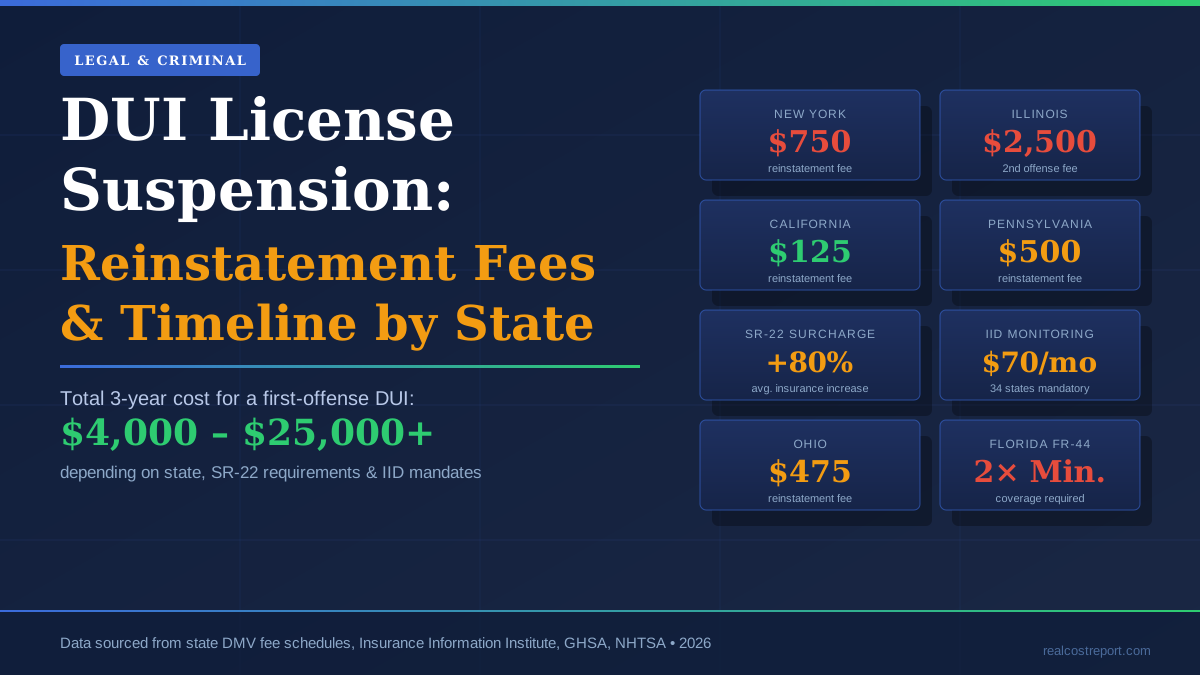
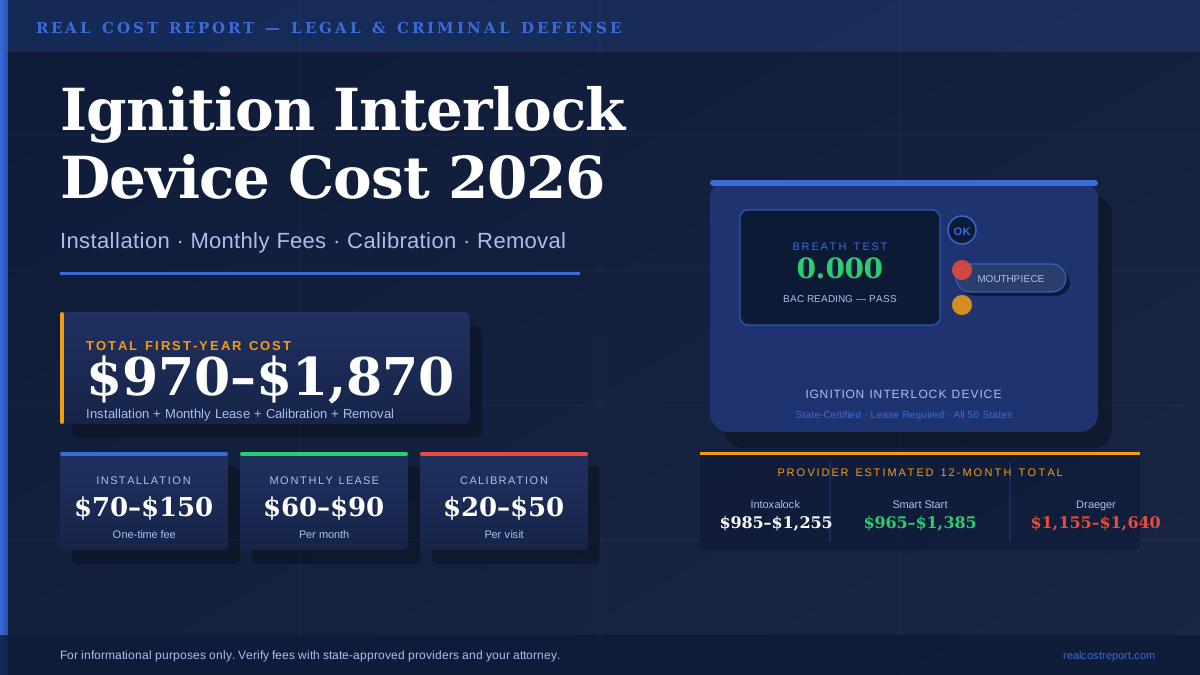
- Total first-year cost of an ignition interlock device (IID) typically runs $970–$1,580, combining installation, monthly leasing fees, and calibration visits.
- Installation averages $70–$150 depending on provider and state; monthly monitoring fees range $60–$90, billed every 30 days for the entire court-mandated period.
- Draeger LifeGuard and Intoxalock are the two largest national providers; Smart Start and LCI (Lifesafer) are strong regional alternatives with lower average monthly fees in several states.
- Most drivers underestimate total cost by 40% because they ignore calibration visits ($20–$50 each, required every 30–60 days) and the removal fee ($50–$100).
- Low-income exemption programs exist in at least 34 states and can reduce or waive fees — but you must apply before installation, not after.
- Bottom line: Get written quotes from at least three state-approved providers before signing; the spread between the cheapest and most expensive can exceed $400 over a 12-month mandate.
A first-time DUI conviction in most U.S. states now triggers a mandatory ignition interlock device requirement — and the bill lands entirely on the driver. According to the National Conference of State Legislatures (NCSL), as of 2024 all 50 states have enacted IID legislation, and 34 states plus Washington D.C. mandate the device for first-time offenders with a blood-alcohol content at or above 0.08%. What that legislation rarely spells out is the true cost: installation is the smallest line item, yet it’s the only number most people see before signing a lease agreement. Intoxalock, one of the nation’s largest providers, lists installation starting at $70, but a driver completing a standard 12-month program in a moderate-fee state will typically pay $1,100–$1,400 in total before the device comes out of the car. This article models the complete cost stack — installation, monthly lease, calibration, data download, and removal — across the four dominant national providers, and identifies the mistakes that turn a $70 installation into a $1,600 year.
What Does an Ignition Interlock Device Actually Cost? The Full Fee Stack
The advertised installation price is real, but it is one of five recurring or one-time charges you will pay. Understanding each fee category before you sign a service agreement is the only way to compare providers accurately.
Installation fee: A one-time charge collected at the service center when the device is wired into your vehicle’s ignition system. Range: $70–$150 nationally.
Monthly lease fee: The largest single cost driver. Covers device rental and basic monitoring. Billed every 30 days for the duration of the court order. Range: $60–$90/month.
Calibration / service visit fee: Most states require a calibration check every 30–60 days. Some providers bundle this into the monthly fee; most do not. Range: $20–$50 per visit. At 60-day intervals over 12 months, that is 6 visits — adding $120–$300 to annual cost.
Data download / monitoring fee: The device logs every breath test and transmits data to the state monitoring authority. Some providers charge $10–$20/month separately; others include it. Verify in writing before signing.
Removal fee: Charged when the court-mandated period ends and a technician removes the device. Range: $50–$100. A handful of providers waive this fee as a retention tactic — ask explicitly.
Figures modeled from published rate ranges at Intoxalock, Smart Start, Draeger LifeGuard, and Lifesafer (verify current pricing at intoxalock.com, smartstartinc.com, draeger.com, lifesafer.com). State-mandated calibration frequencies sourced from the Governors Highway Safety Association (GHSA) (verify at ghsa.org).
Provider-by-Provider Cost Comparison: Intoxalock vs Smart Start vs Draeger vs Lifesafer
All four major national providers are state-approved in most jurisdictions, but their fee structures differ enough to shift your total cost by hundreds of dollars. Provider availability also varies: not every provider services every state, and in some states only one or two appear on the approved vendor list. Always verify with your state DMV or court before selecting a provider.
The comparison below reflects published rates and publicly available fee disclosures as of early 2026. Promotional pricing and bundled calibration deals can change these figures significantly — request an itemized written quote, not a verbal estimate.
Estimated 12-month totals assume 6 calibration visits (60-day intervals) and one removal. Published rate ranges verified at intoxalock.com, smartstartinc.com, draeger.com, and lifesafer.com (verify current pricing directly). Ranges reflect regional variation; urban markets often carry higher service fees.
Two takeaways stand out. First, Intoxalock’s bundled calibration model is genuinely competitive for drivers in states with 30-day calibration requirements — six extra visits at $20–$35 each adds $120–$210 to any provider that charges separately. Second, Draeger’s higher installation and calibration floor makes it the most expensive option in nearly every modeled scenario, though its technology is frequently cited in court-approved monitoring contexts. If Draeger is your only state-approved option, budget toward the higher end of the range above.
Intoxalock vs Smart Start: Which Is Better for a First-Time Offender?
These two providers dominate market share nationally and are the most likely options a first-time offender will encounter. The choice between them comes down to service center proximity, calibration fee structure, and customer support track record during violations.
Intoxalock bundles calibration into the monthly fee in most states — a genuine advantage if your court order requires 30-day service intervals. Their network exceeds 10,000 service locations nationally, which matters for drivers in mid-size cities or suburban areas. Monthly fees run $70–$90, which is not the cheapest, but the all-in predictability appeals to drivers who want no billing surprises.
Smart Start charges calibration separately at $20–$35 per visit but starts with a lower base monthly fee of $60–$80. For drivers with 60-day calibration requirements (the more common mandate for first-time offenders), this works out to 6 visits per year — adding $120–$210 annually. At 60-day intervals, Smart Start is frequently cheaper over the full program period despite the separate calibration charge. Smart Start also advertises a low-income assistance program in select states.
One operational difference that costs money: both providers charge lockout fees if a driver misses a scheduled calibration window. Intoxalock’s lockout fee is typically $75–$150; Smart Start’s ranges similarly. Miss a calibration appointment and the device prevents the car from starting, which can trigger a violation report to the court — extending your mandate on top of the lockout fee.
Verdict
For first-time offenders with a 60-day calibration requirement, Smart Start offers lower total cost in most modeled scenarios — often by $80–$180 over 12 months. Intoxalock is the better choice if your mandate requires 30-day calibrations, your state bundles calibration fees by law, or you need the widest possible service center network. Confirm calibration interval requirements with your attorney or court before selecting a provider.
What Determines How Long You Pay: Mandate Length by State and Offense Level
Mandate duration is the single largest variable in total IID cost — every additional month adds $60–$90 in lease fees plus calibration. Duration is set by state law, court order, or both, and it scales sharply with BAC level and prior offenses.
The NCSL and Mothers Against Drunk Driving (MADD) publish mandate-length data by state. First-offense minimums range from 6 months (several states including Colorado and Washington) to 24 months (Arizona for BAC ≥ 0.15% under its extreme DUI provision). Most first-time offenders with a standard BAC reading fall into a 6–12 month window.
Mandate-length ranges sourced from the National Conference of State Legislatures IID laws database (verify at ncsl.org) and MADD’s ignition interlock resource center (verify at madd.org). Monthly fee uses $75 midpoint estimate. Add calibration, install, and removal for total program cost.
Mandate extension is an underappreciated risk. In most states, a failed breath test, a missed calibration, or tampering with the device resets or extends the clock. A single failed test — including one caused by mouthwash containing alcohol — can add 30–90 days to a mandate. That is $75–$270 in additional lease fees plus the associated calibration costs. Behavior during the mandate period is as financially important as choosing the right provider.
What Most People Get Wrong About Ignition Interlock Costs
Four specific misconceptions reliably inflate total program cost for drivers who do not know to look for them.
Mistake 1: Signing with the first provider recommended at the courthouse. Courts cannot legally steer defendants to specific providers in most states, but informational materials in courthouse lobbies sometimes feature only one or two vendors. Consequence: paying $200–$400 more than necessary over a 12-month period. Correct action: Request your state’s full approved provider list from the DMV or court clerk, get written quotes from at least three, and compare itemized fee schedules — not just the installation price.
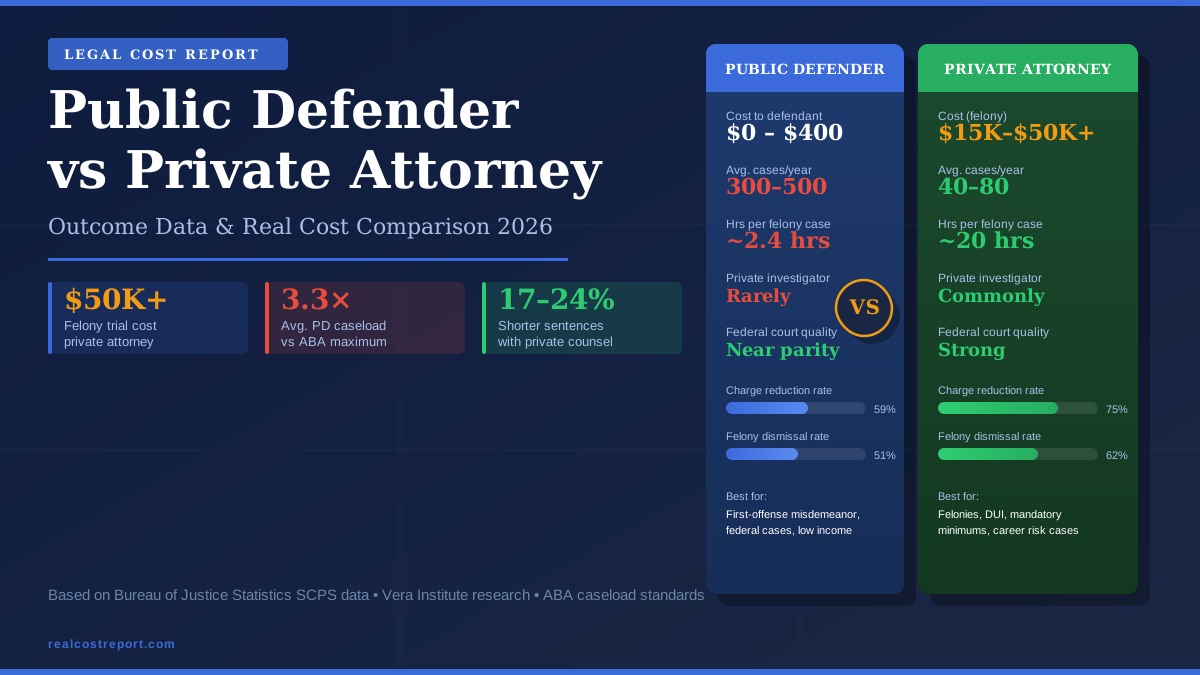
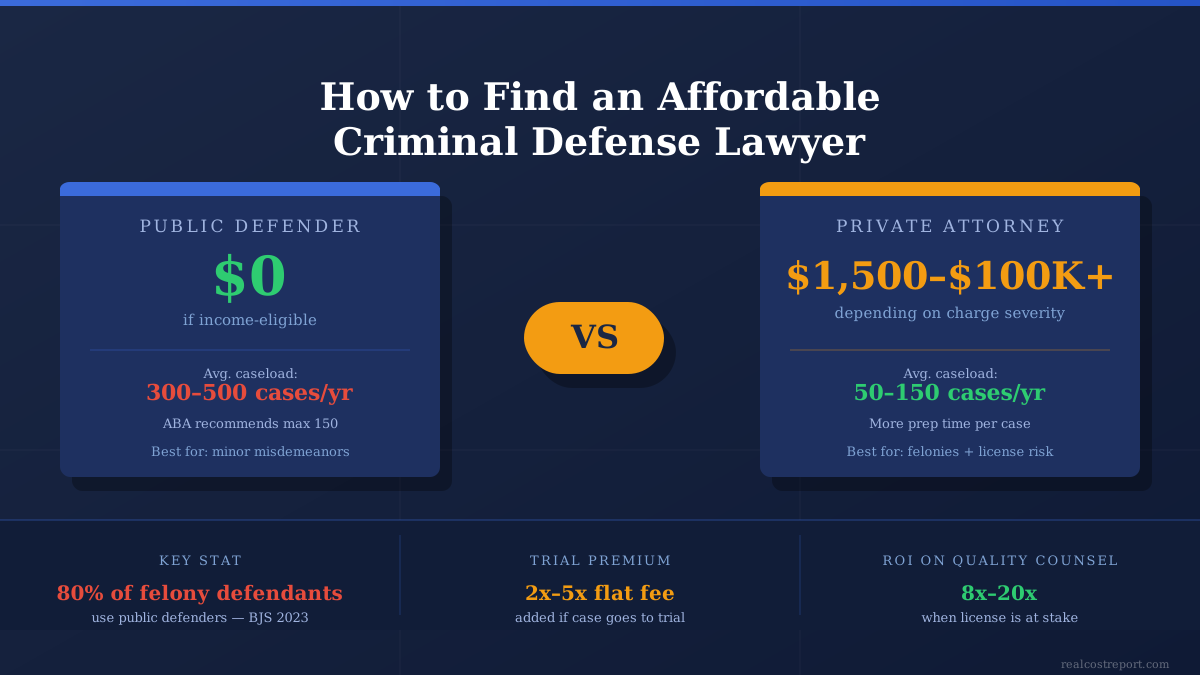
Mistake 2: Not applying for low-income fee assistance before installation. At least 34 states have IID financial assistance programs for drivers meeting income thresholds. California’s Ignition Interlock Device Program offers reduced fees through the DMV (verify at dmv.ca.gov); Texas similarly routes assistance through its Department of Transportation (verify at txdot.gov). These programs cannot reimburse fees already paid. Consequence: foregoing $200–$600 in subsidy eligibility. Correct action: Ask your attorney or public defender about your state’s program before your first service center appointment.
Mistake 3: Assuming mouthwash, food, and medication cannot trigger a violation. Alcohol-based products — including certain mouthwashes, kombucha, ripe fruit, and some cough medicines — can produce a breath test reading above the device threshold (typically 0.02%–0.025%). A violation report triggers a court review and may extend the mandate. Consequence: additional months of device fees plus potential legal fees. Correct action: Use alcohol-free oral hygiene products for the entire mandate period and wait 15 minutes after eating or drinking before providing a breath sample.
Mistake 4: Scheduling removal too early. The removal appointment must follow formal court authorization, not just the calendar end date. If you schedule removal before the authorization paperwork is processed and the provider has not received it, you face a failed removal appointment fee ($50–$100) and must rebooking. Correct action: Confirm in writing with the provider that court authorization has been received before scheduling the removal appointment.
Mistake 5: Ignoring the vehicle compatibility surcharge. Older vehicles, hybrids, push-button ignitions, and vehicles with non-standard wiring harnesses often require a compatibility modification during installation, adding $50–$150 to the base installation fee. Ask specifically about your vehicle’s make, model, and year before quoting.
Is Renting vs Buying an IID Ever Worth Considering?
All major providers lease — they do not sell — ignition interlock devices to program participants. This is partly regulatory (states require certified device maintenance and calibration logs) and partly commercial. However, for drivers facing mandates of 24 months or longer, the question of whether ownership would be cheaper is legitimate.
Gray-market and secondary-market IID units do exist, but using a non-certified device — or a device not installed by a state-approved provider — results in immediate mandate violation and typically license revocation. There is no legal path to ownership that bypasses the state-approved provider and calibration system. The lease model is, for all practical purposes, mandatory.
What is negotiable in some markets: provider pricing on multi-year terms. Several providers offer discounted monthly rates for upfront prepayment of 6 or 12 months. Smart Start, for instance, has advertised prepay discounts in select states that reduce the effective monthly fee by $5–$10. On a 24-month mandate, that saves $120–$240. Ask each provider explicitly whether a prepay discount exists and get it in writing — including what happens to the prepaid balance if you miss a calibration and the mandate is extended.
Verdict
You cannot legally own your IID, but you can reduce effective cost by 8%–12% on longer mandates through prepay arrangements where offered. This strategy only makes sense if your financial situation is stable enough to front 6–12 months of fees — do not prepay if it strains emergency savings, as reinstatement fees after a lapse can exceed any discount captured.
How We Researched This Article
This article was developed using a combination of published fee schedules, state regulatory databases, and data from national highway safety organizations. Research was conducted in April 2026.
Provider fee ranges for Intoxalock, Smart Start, Draeger LifeGuard, and Lifesafer were sourced from their publicly available pricing pages and written quote disclosures. Because these providers do not always publish state-by-state breakdowns, ranges reflect the span of fees observed across multiple state markets rather than a single quoted rate. Readers should request itemized written quotes for their specific state and vehicle.
Mandate-length data was drawn from the National Conference of State Legislatures’ ignition interlock laws database, which tracks legislative changes by state. Calibration interval requirements were cross-referenced with the Governors Highway Safety Association’s impaired driving state law index. Financial assistance program existence was verified through the MADD ignition interlock resource center and individual state DMV pages.
Total cost modeling used a standard 12-month mandate with 60-day calibration intervals (6 visits), one installation, and one removal, with fees drawn from published provider ranges. The model does not include lockout fees, violation-related mandate extensions, or vehicle compatibility surcharges, which vary too widely to model reliably without individual vehicle data. Actual total cost may be higher.
Low-income program details were verified at the California DMV DUI program page and the National Highway Traffic Safety Administration’s drunk driving resource page. No figures were modeled from single-vendor claims without cross-referencing a second source. All figures were verified against named primary sources before publication.