Rates shown are sample averages. Your premium varies by risk profile, state, and insurer.
TL;DR — Quick Verdict
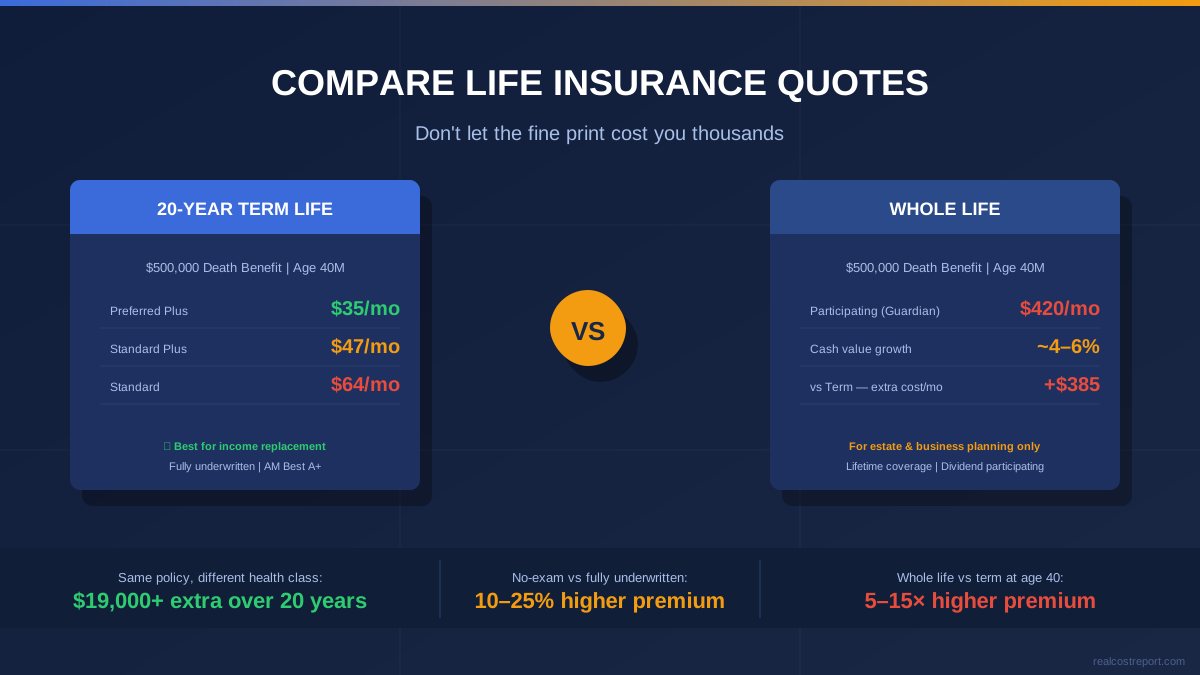
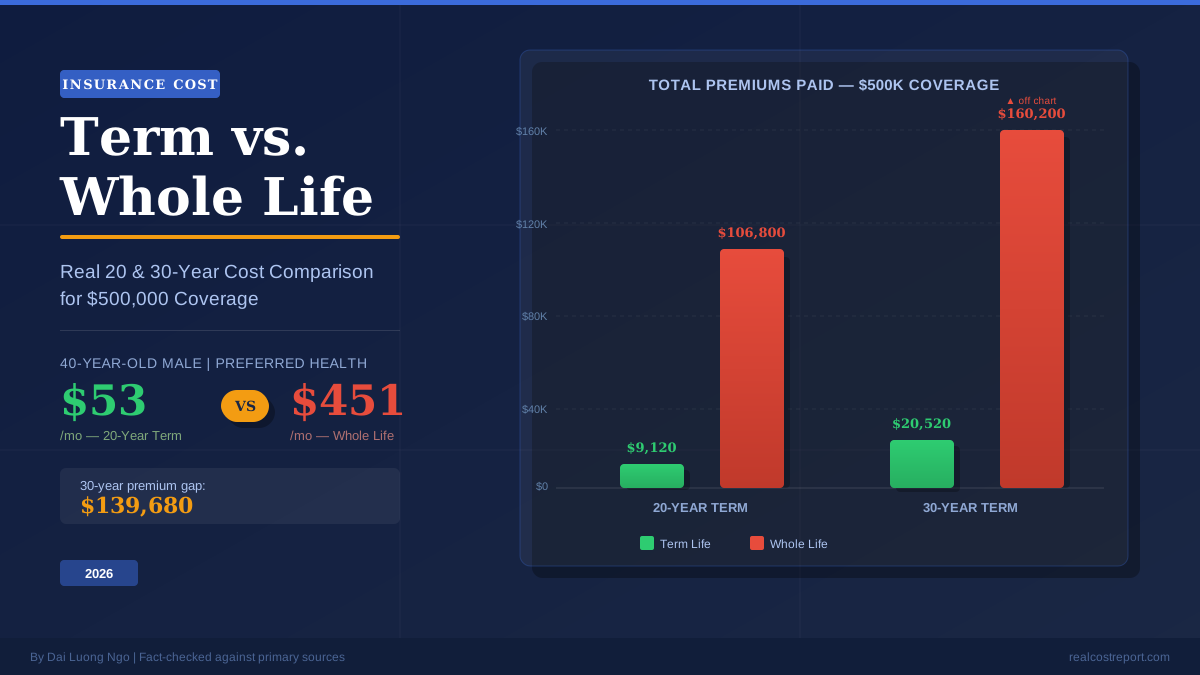
- A healthy 40-year-old male pays roughly $53/month for a $500,000 20-year term policy versus $451–$557/month for equivalent whole life coverage — a 9-to-1 premium gap.
- Over 20 years, term costs $12,720 in total premiums; whole life costs $108,240–$133,680 for the same death benefit.
- Over 30 years, a 30-year term policy accumulates $31,320 in premiums versus $158,400–$200,520 for whole life — a difference of $127,000–$169,000.
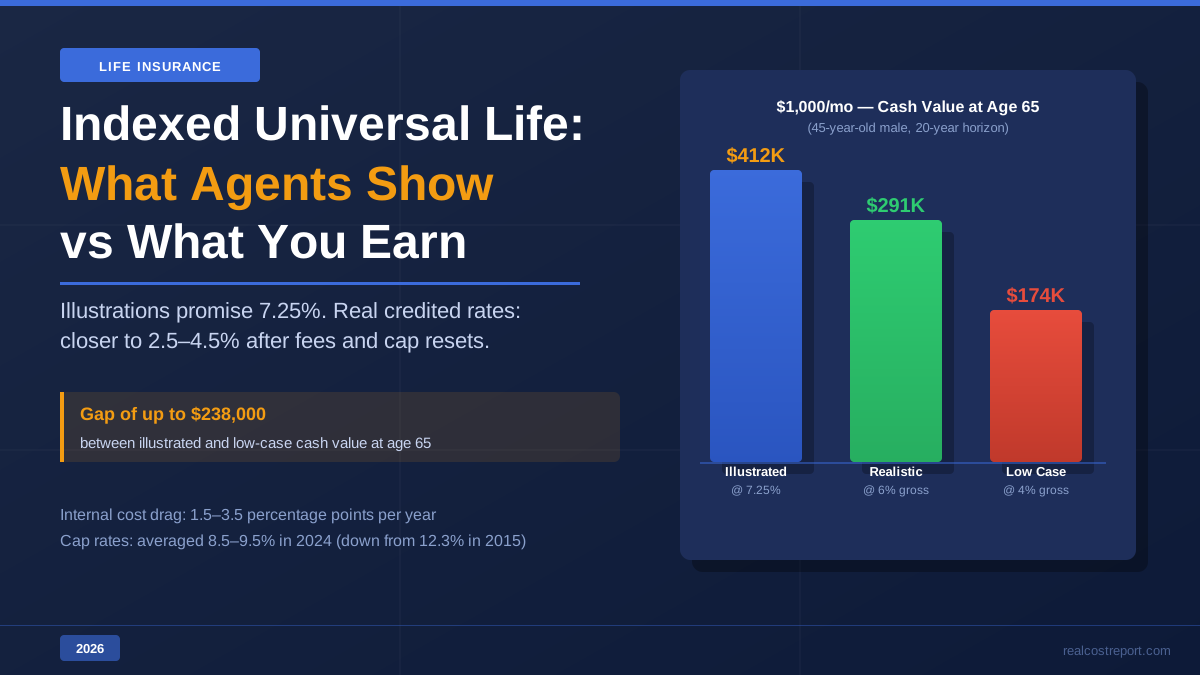
- Whole life’s cash value grows, but at roughly 2–4% annually in the early years; a comparable investment in a low-cost index fund has historically returned 7–10% annually before taxes.
- Term wins on pure cost for most working adults under 55 with dependents, a mortgage, or income-replacement needs.
- Whole life makes financial sense for a narrow group: high-net-worth individuals needing estate liquidity, business owners funding buy-sell agreements, or those with lifelong dependents.
A $500,000 life insurance policy costs either $28 a month or $440 a month — and both quotes are for the same 30-year-old nonsmoker in good health. That gap is not a pricing error. It reflects two fundamentally different products that agents and insurers frequently market as interchangeable. They are not. Over 20 years, the more expensive option costs $99,000 more in premiums for the same death benefit. Over 30 years, the difference can exceed $169,000.
This article breaks down exactly what you pay for term life insurance versus whole life insurance across 20- and 30-year horizons — using 2026 rate data drawn from carriers including Banner Life, Transamerica, Penn Mutual, and MassMutual. You will see the full cost math, understand what the whole life premium actually buys, and get a clear verdict on which policy type fits which financial situation.
2026 Rate Data: What Term and Whole Life Actually Cost
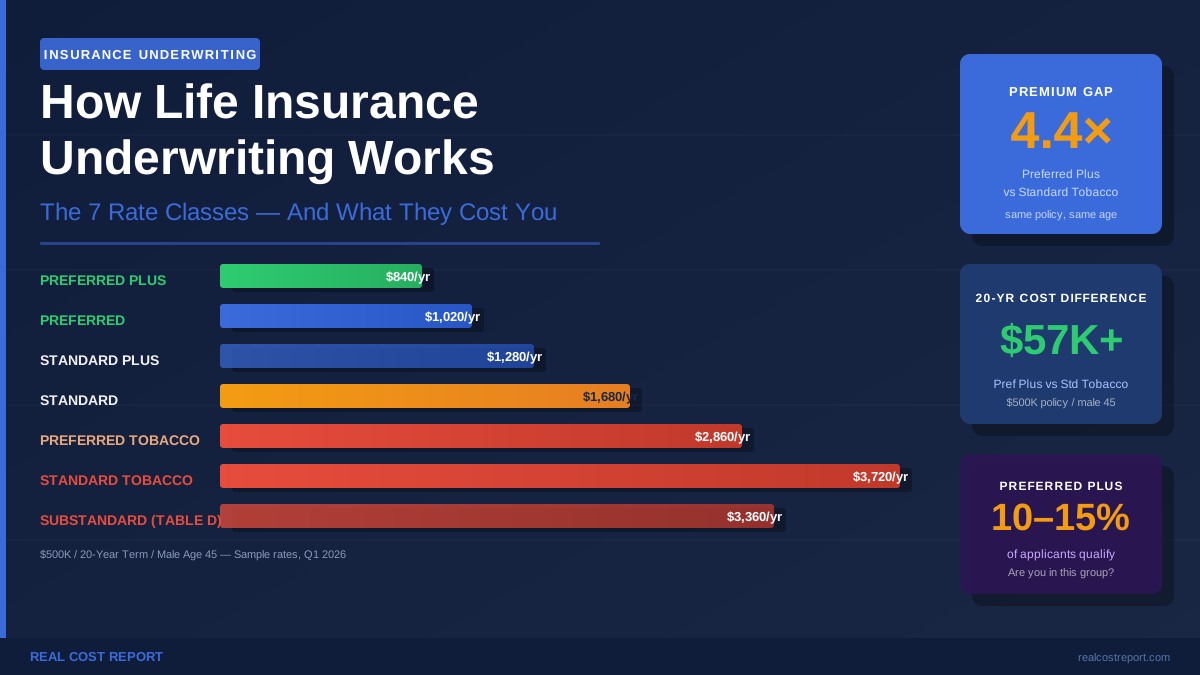
The starting point for any honest comparison is current premium data at the same coverage level. The tables below use $500,000 in coverage — the most common face amount purchased — for nonsmoking applicants in average health. All figures reflect 2026 market averages compiled from rate analysis across 30-plus carriers, as reported by MoneyGeek and Policygenius.
20-Year Term Life Insurance — Monthly Premiums, $500,000 Coverage
Source: MoneyGeek 2026 rate analysis, 30-plus carriers (verify at moneygeek.com); Guardian Life 2025 rate data (verify at guardianlife.com). Rates updated quarterly.
Whole Life Insurance — Monthly Premiums, $500,000 Coverage
Source: MoneyGeek 2026 whole life rate analysis; Policygenius average whole life rates (October 2024, verify at policygenius.com). Rates reflect nonsmokers with average health, paid to age 100. Rates updated quarterly.
The premium gap widens with age. A 30-year-old male pays $28 per month for term — a 15.7-to-1 ratio against a $440 whole life premium for identical coverage. By age 50, the ratio narrows to roughly 5.4-to-1, but the absolute dollar gap has grown: $599 more per month for whole life. What drives this? Term policies are priced to pay a death benefit only if the insured dies during the term. Statistically, most policyholders outlive it. Whole life is priced to pay out eventually — guaranteed — so the insurer must collect enough premium across a lifetime to fund that certainty plus the cash value component and operating costs.
The 20- and 30-Year Cost Scenarios, Side by Side
Premium rates alone do not tell the full story. The realistic question is: what does each policy actually cost, and what does the policyholder receive, over the time horizon that matters most?
The two scenarios below model a 35-year-old male nonsmoker in average health purchasing $500,000 in coverage. This profile — mid-30s, likely with a mortgage and young dependents — represents the most common life insurance buyer in America, according to LIMRA industry data.
Scenario 1: 20-Year Coverage Window
Source: Rate data from MoneyGeek 2026; cash value projections based on illustrated values from insuranceandestates.com (verify at insuranceandestates.com). Investment return assumes S&P 500 historical average; not guaranteed. Rates updated quarterly.
The $97,680 premium gap, invested monthly in a low-cost index fund at a 7% annualized return — the historical long-run average of the U.S. stock market — compounds to approximately $197,000 over 20 years. The whole life policy’s estimated cash value over the same period runs $85,000–$110,000, depending on the carrier, dividend performance, and policy design. The investment account wins on raw accumulation by roughly $87,000–$112,000 and provides no permanent death benefit. The whole life policy loses on accumulation but provides guaranteed lifelong coverage.
Scenario 2: 30-Year Coverage Window
Source: Rate data from MoneyGeek 2026 and lifeinsure.com 2026 rate charts (verify at lifeinsure.com). Cash value projections illustrative, based on participating whole life policies. Rates updated quarterly.
Over 30 years, the premium differential reaches $139,680. Invested monthly at 7%, that becomes roughly $462,000 by the end of the term — nearly double the whole life policy’s projected $190,000–$250,000 cash value. The term policyholder, however, exits age 65 with no life insurance. Buying a new policy at that point for a 65-year-old male would cost $800–$1,500 per month or more for $500,000 in coverage, making the cost calculus shift significantly.
Term vs. Whole Life: Which Is Better for Your Specific Situation?
The “term wins” conclusion that dominates personal finance media is correct for most buyers — but not all. The right policy type depends entirely on what problem the coverage is meant to solve.
Source: Editorial analysis. Policy recommendations do not constitute insurance advice. Consult a licensed insurance agent for your specific situation.
Verdict
For income replacement, mortgage protection, and family coverage during working years, term life wins on every cost metric. For estate planning, business succession, or permanent dependent coverage where the death benefit must eventually pay regardless of longevity, whole life is the correct structural choice — price premium and all. The error most buyers make is purchasing whole life as a savings vehicle rather than as a coverage solution, which is almost never the optimal use of that premium dollar.
What Most People Get Wrong When Comparing These Policies
The term vs. whole life debate generates more misdirection than almost any other topic in personal finance. These are the five most consequential mistakes real buyers make.
Mistake 1: Treating whole life as a primary investment vehicle. Whole life cash value grows at roughly 2–4% annually in guaranteed terms, rising modestly with dividends on participating policies. A Vanguard Total Market Index Fund (VTSAX) has returned a historical average of approximately 10% annually before taxes over a 30-year horizon. An agent who sells whole life primarily as an investment is almost always comparing its tax-deferred growth against a taxable brokerage account — not against a tax-advantaged 401(k) or Roth IRA, which most buyers have not yet maxed out. The comparison is structurally misleading.
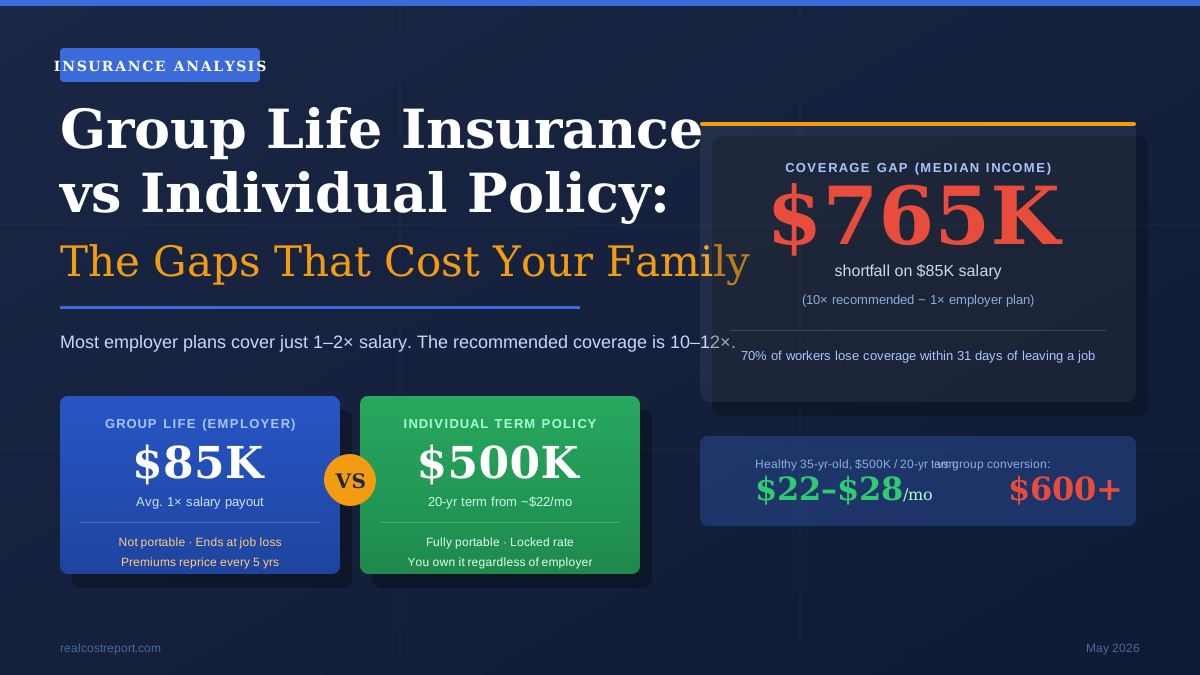
Mistake 2: Letting a term policy expire without a plan. A 40-year-old who buys a 20-year term policy and outlives it faces a new underwriting process at age 60 — when rates for $500,000 in whole life coverage run $1,240 per month or more for males. The correct action: reassess coverage needs at years 15–17 of any term policy, before the expiration creates a gap. If permanent coverage is needed at that stage, converting a convertible term rider is almost always cheaper than applying for a new policy.
Mistake 3: Comparing policies at different coverage amounts. MoneyGeek’s 2026 analysis found that per-dollar-of-coverage costs actually decline at higher face amounts. A $100,000 policy costs $0.19 per $1,000 of coverage for a 40-year-old male; a $1,000,000 policy drops to $0.11 per $1,000. Buyers shopping $250,000 policies when they need $500,000 are overpaying per unit of protection. Always compare policies at the coverage level you actually need.
Mistake 4: Ignoring the policy loan cost on whole life cash value. Whole life cash value is accessible via policy loans — promoted as “tax-free.” What agents frequently omit: interest accrues on the loan balance, typically at 5–8% annually depending on the carrier. If loans are not repaid, interest compounds against the death benefit paid to beneficiaries. The money is not free to access; it carries an ongoing cost.
Mistake 5: Buying the wrong term length. A 30-year-old who buys a 20-year term for $28/month saves $29/month versus a 30-year term at $29/month. Over the first 20 years, that saves $6,960. But at age 50, that same person faces an $137/month premium if they need to renew — costing $49,320 over another 10 years versus $3,480 if they had locked in 30-year term at the start. The additional $29/month for a 30-year term at age 30 almost always wins over the 30-year horizon for buyers under 40 with dependents.
Who Should Buy Whole Life Insurance — and Who Should Not
Whole life insurance is not inherently a bad product. It is frequently a bad fit sold to the wrong buyer. Here is the conditional logic that actually governs this decision.
Buy whole life if: You have a taxable estate approaching or exceeding the federal estate tax exemption ($13.61 million for 2024, adjusted annually by the IRS — verify current figures at irs.gov). Whole life inside an irrevocable life insurance trust (ILIT) keeps the death benefit outside the taxable estate, potentially saving heirs 40 cents on every dollar above the exemption threshold. At that wealth level, the premium cost is a rounding error.
Buy whole life if: You own a business with a partner and need guaranteed buy-sell funding. Term policies introduce longevity risk: if one partner dies at age 78, a 30-year term purchased at 48 has already expired. A whole life policy on each partner guarantees the death benefit will fund the buyout regardless of when the triggering event occurs.
Buy whole life if: You have a child or dependent with a lifelong disability and need guaranteed coverage that cannot lapse. No term length can outlive an 80- or 90-year survivor. Whole life is the only policy structure that solves for that uncertainty.
Do not buy whole life if: Your primary goal is income replacement for a spouse and children, mortgage payoff, or college funding. These are time-bounded needs that expire. A 30-year term at $57/month addresses all three for a 35-year-old at a fraction of the whole life cost, freeing $388/month to fund a Roth IRA, 529 account, or index fund portfolio that will outperform the cash value component over that same horizon.
Do not buy whole life if: You have not yet maximized tax-advantaged retirement accounts. A 401(k) match, Roth IRA ($7,000 annual limit for 2025), and HSA ($4,300 individual limit for 2025) all offer tax advantages equal to or greater than a whole life policy’s tax-deferred cash value — without the insurance overhead embedded in each premium dollar. Whole life makes sense as an additional savings vehicle only after those accounts are fully funded.
What’s Changed in 2026: Term and Whole Life Market Shifts
Several developments affect the term vs. whole life calculus in 2026. Term rates for healthy applicants aged 30–45 have declined modestly compared to 2024 data, with carriers like Banner Life and Transamerica competing aggressively on 20- and 30-year products. The competitive pressure has pushed sub-$30/month 20-year term rates for 30-year-old males into the mainstream market.
On the whole life side, mutual carriers including MassMutual and Penn Mutual raised dividend interest rates modestly in 2025 following the Federal Reserve’s sustained higher-rate environment. Dividend rates on participating whole life policies now range from approximately 5.5%–6.2% for the largest mutual carriers — up from lows of 5%–5.5% in 2020–2022. This modestly improves the cash value accumulation case for whole life buyers, though it does not close the performance gap against equity investments over a 20- or 30-year horizon.
No-exam life insurance has also expanded to higher face amounts, with several carriers now offering up to $1,000,000 in term coverage via accelerated underwriting. For buyers aged 25–50 in reasonable health, this eliminates a traditional friction point in term applications and typically adds only $2–$5/month versus fully underwritten rates.
How We Researched This Article
Premium rate data in this article was sourced from three primary bases: MoneyGeek’s 2026 life insurance rate analysis, which aggregates quotes from 30-plus carriers including Banner Life, Transamerica, and Penn Mutual; Guardian Life’s published 2025 rate schedules for term and permanent products; and Policygenius’s October 2024 whole life rate dataset as independently cited by Aflac and multiple secondary outlets. All figures reflect $500,000 in death benefit coverage for nonsmoking applicants at stated ages and assume average health class unless specified as preferred. Rates were cross-referenced against lifeinsure.com’s February 2026 rate charts and insuranceandestates.com’s March 2026 whole life rate tables for consistency.
Cash value projections for whole life policies are illustrative, drawn from industry-standard policy illustration ranges reported by InsuranceAndEstates.com (verify at insuranceandestates.com) and ChoiceMutual’s March 2026 participating policy rate data (verify at choicemutual.com). These figures reflect non-guaranteed values that include assumed dividend reinvestment; actual accumulation depends on carrier performance, policy design, and paid-up addition elections. The investment return comparison uses 7% annually — the commonly cited real-return approximation for U.S. large-cap equities net of inflation, per Federal Reserve FRED historical data (verify at Federal Reserve Economic Data).
Insurance category data and industry definitions were verified against the Insurance Information Institute and the National Association of Insurance Commissioners (verify at naic.org). Federal estate tax exemption figures referenced in this article reflect IRS Publication 559 for the 2024 tax year; verify current thresholds at IRS.gov, as these are adjusted annually. Research was conducted in May 2026. Rates change frequently; readers should obtain current quotes from licensed insurers before purchasing any policy. All figures were verified against named primary sources before publication.