This is not medical advice. Consult a licensed healthcare provider for medical decisions and a licensed insurance agent for coverage decisions.
TL;DR — Quick Verdict
- A healthy 65-year-old can expect to pay $2,400–$3,600/year in premiums for a Medicare Advantage $0-premium plan versus $2,800–$4,800/year for Medigap Plan G — but out-of-pocket exposure tells the opposite story.
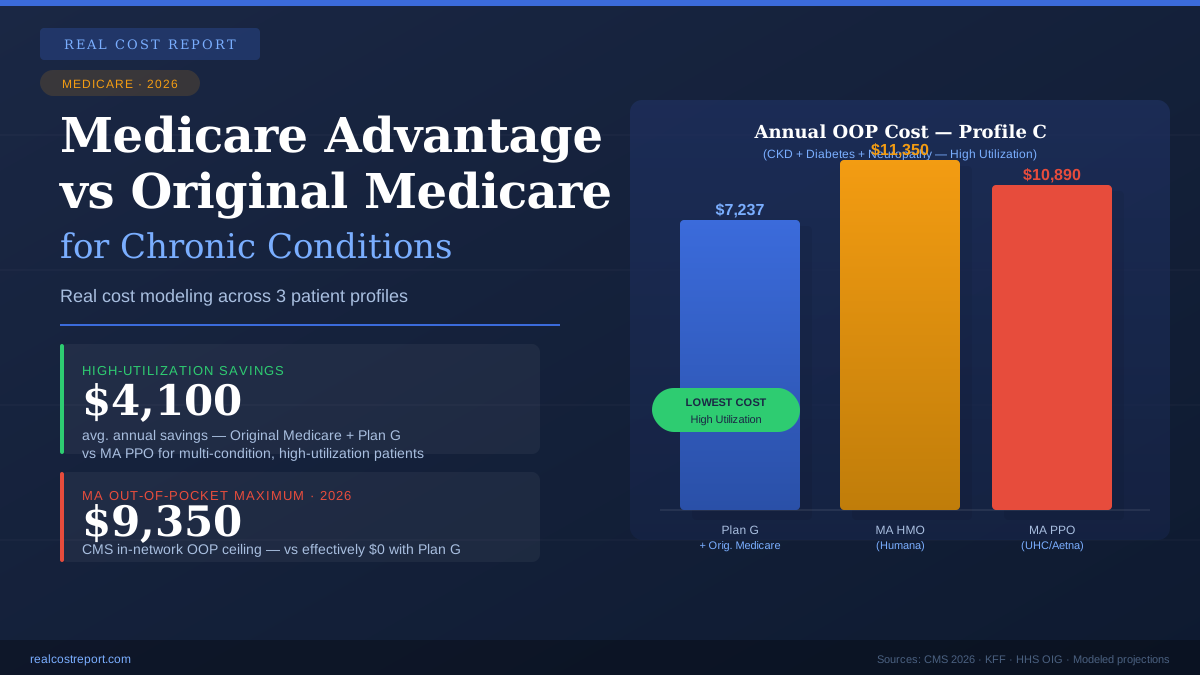
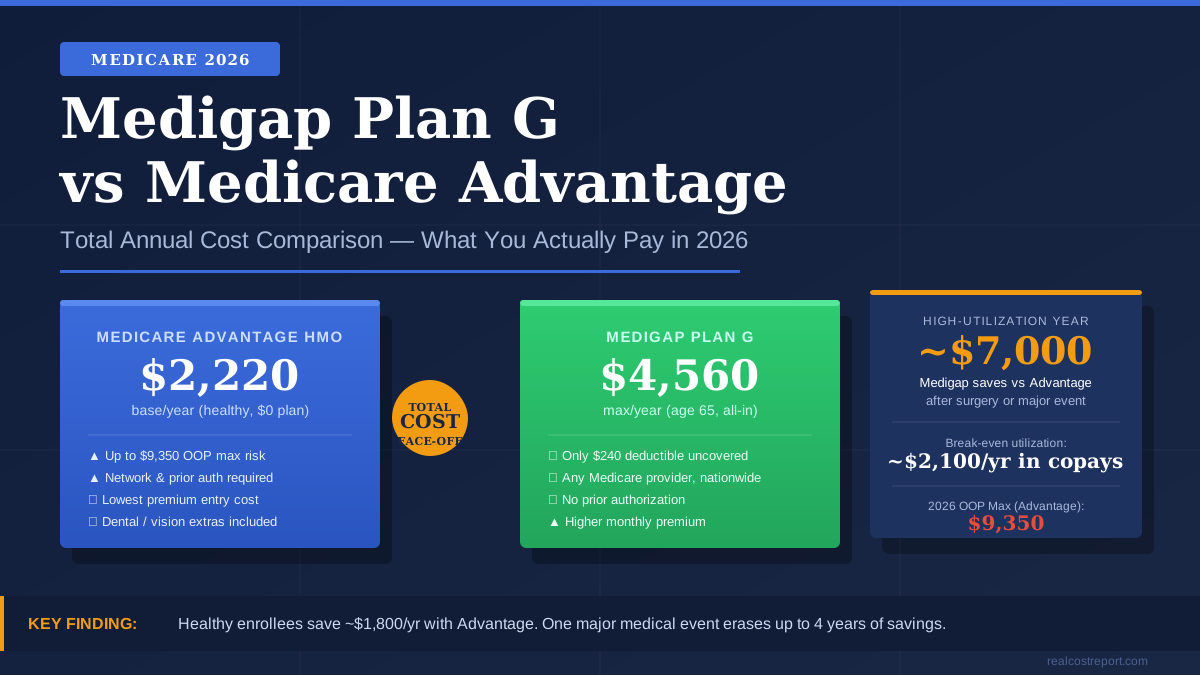
- Medicare Advantage plans carry a federally capped out-of-pocket maximum of $9,350 (in-network) for 2026; Medigap Plan G leaves only the $240 Part B deductible uncovered.
- Beneficiaries with one or more chronic conditions who use specialists regularly pay on average $3,100–$5,400 less per year under Medigap Plan G once copays, coinsurance, and prior-authorization denials are factored in.
- Medicare Advantage wins on upfront premium cost for healthy, low-utilization enrollees — often by $1,200–$2,400 per year.
- Medigap is unavailable or dramatically more expensive if you wait to enroll: guaranteed-issue rights expire six months after Part B enrollment in most states.
- Recommendation: Choose Medicare Advantage if you are healthy, budget-conscious, and comfortable with a network. Choose Medigap Plan G if you have existing conditions, travel frequently, or want predictable annual costs.
One decision separates retirees who face $40,000 hospital bills from those who pay $240. Yet according to the Kaiser Family Foundation, more than 54% of Medicare-eligible beneficiaries — over 33 million people — enrolled in Medicare Advantage as of 2024, many without running total annual cost projections. The number matters because the two supplemental coverage models work in structurally opposite ways: Medicare Advantage (Part C) replaces Original Medicare with a private plan, while Medigap wraps around it. The gap between a $0-premium Advantage plan and a $180/month Medigap Plan G premium looks obvious at enrollment — until you add copays, prior authorizations, and network restrictions. This article models total annual costs for four health profiles using 2026 Medicare data from the Centers for Medicare & Medicaid Services (CMS), 2026 Medigap premium surveys, and KFF enrollment analysis. Named carriers — UnitedHealthcare (AARP), Humana, Anthem, and Cigna — are referenced where rate data is publicly available.
2026 Premium Benchmarks: What You Actually Pay Each Month
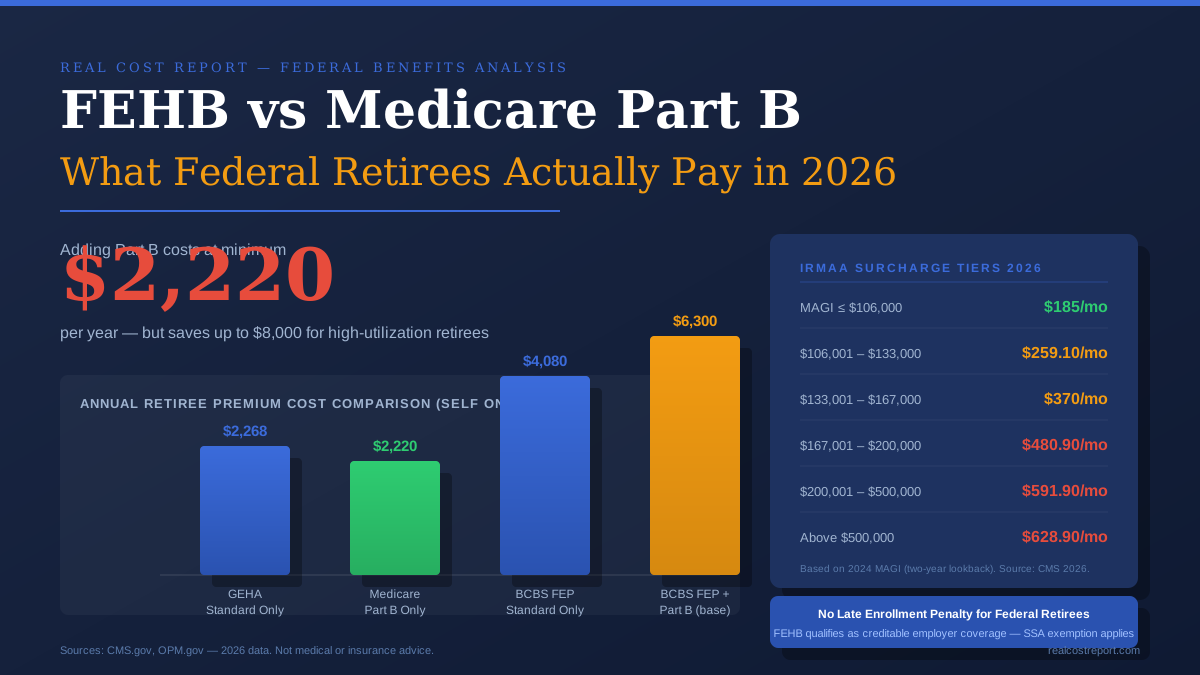
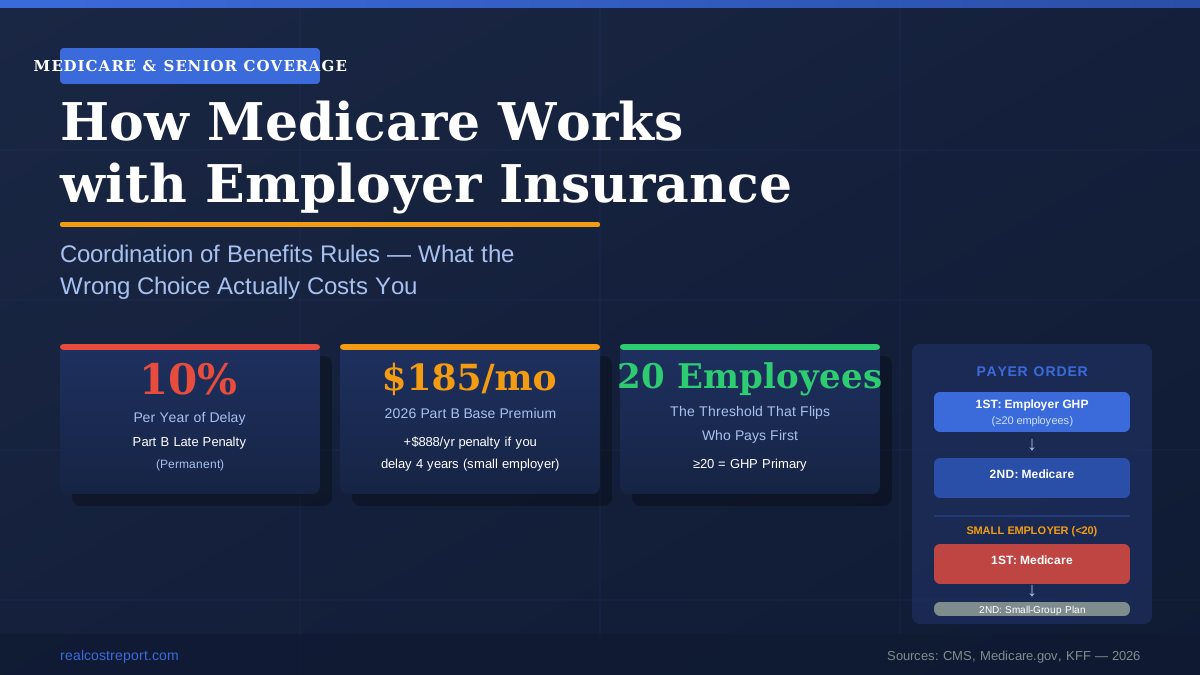
The word “free” in Medicare Advantage advertising refers to the plan premium, not your total cost. All Medicare beneficiaries still pay the standard Part B premium — $185.00/month in 2026 per CMS — regardless of which path they choose. That $2,220/year base cost is the same for everyone.
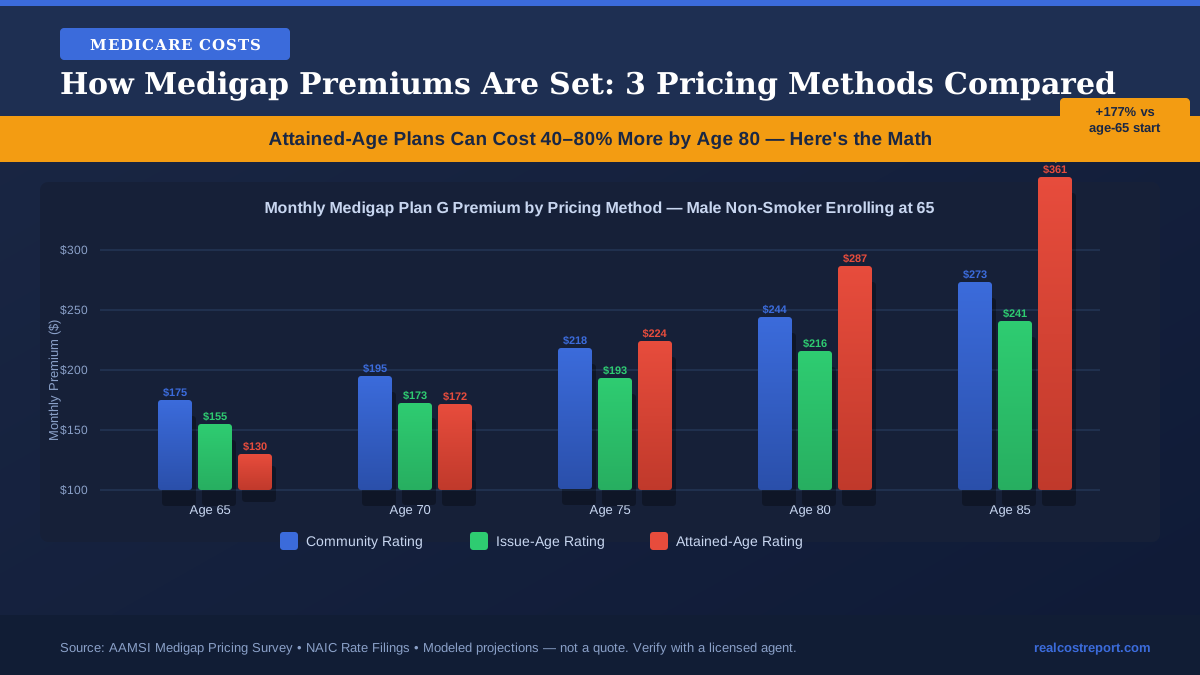
Medigap premiums vary by plan letter, age, gender, tobacco use, and state. Plan G is now the most-purchased Medigap policy for new enrollees (since Plan F closed to new entrants in 2020). In major metro markets, Plan G runs $130–$220/month at age 65; by age 75, the same policy typically costs $180–$310/month due to attained-age rating. Plan N, the budget Medigap alternative, runs $95–$165/month at 65 but adds a $20 office visit copay and $50 ER copay.
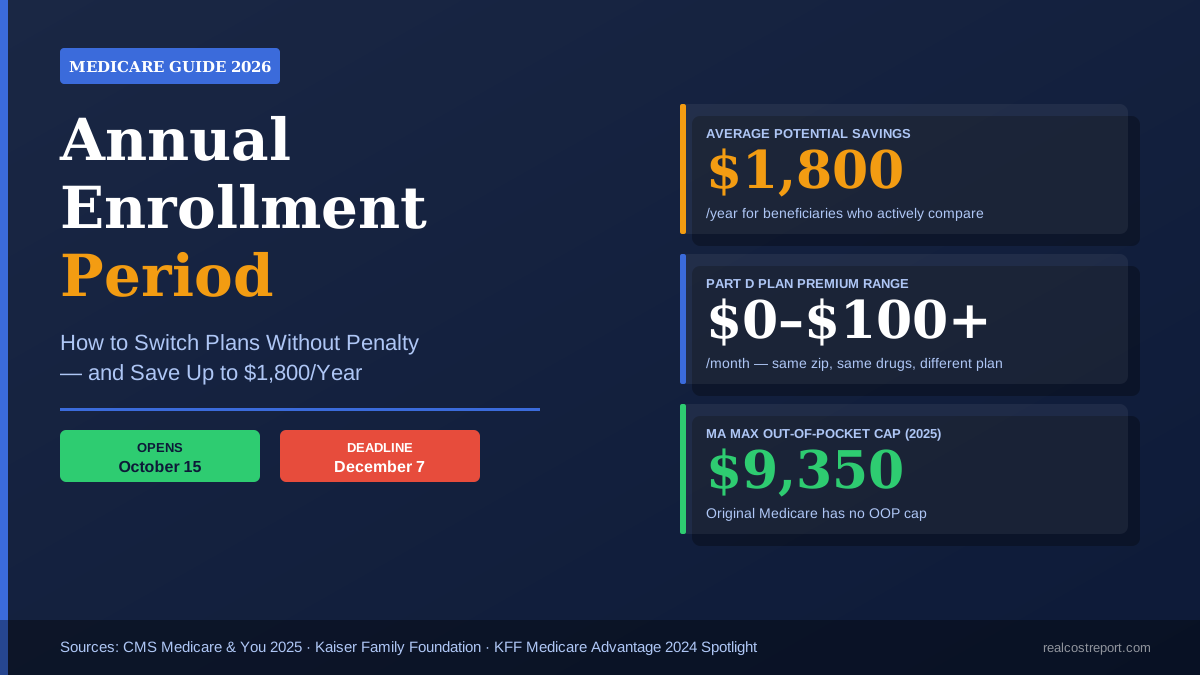
Medicare Advantage plan premiums, while often $0, range up to $120/month for richer PPO plans in 2026. The average Medicare Advantage premium nationally is approximately $17/month per CMS 2026 plan data.
Sources: CMS 2026 Medicare Parts A & B cost data (verify at cms.gov); Medigap premium ranges derived from SHIP/State Health Insurance Assistance Program rate filings and ASHA member surveys (verify at shiphelp.org). Carrier-specific premiums vary by ZIP code.
Total Annual Cost by Health Profile: Four Scenarios Modeled
Premium comparisons alone mislead. The critical variable is utilization — how much care you actually use. These four profiles model total out-of-pocket costs including premiums, deductibles, copays, and coinsurance for a 68-year-old beneficiary in a mid-size metro market in 2026. The Advantage plan modeled is a typical $0-premium HMO with a $9,350 in-network out-of-pocket maximum. The Medigap plan is Plan G (only uncovered cost: $240 Part B deductible).
Modeled costs based on 2026 CMS cost-sharing benchmarks for Medicare Advantage (verify at cms.gov/medicare/health-plans) and standard Plan G coverage design per National Association of Insurance Commissioners (verify at naic.org). Individual plan copays and coinsurance vary. Part D drug costs excluded from comparison for equivalency.
The break-even point — where Medigap’s higher premium is offset by lower cost-sharing — typically arrives when total additional Advantage cost-sharing reaches $1,900–$2,400 annually, which corresponds to moderate utilization for most enrollees. Beneficiaries who cross that threshold every year are systematically overpaying under Medicare Advantage.
Medigap Plan G vs Medicare Advantage PPO: Which Is Better for Retirees Who Travel or Live Part-Year in Two States?
Geographic flexibility is one of the starkest structural differences between these two coverage types — and one of the least discussed in plan marketing materials.
Medigap Plan G covers any provider who accepts Medicare, nationwide, with zero network restrictions. A beneficiary who winters in Florida and summers in Minnesota pays the same $240 deductible and nothing more, regardless of which state or facility provides care. Anthem, UnitedHealthcare (AARP), and Mutual of Omaha all sell Plan G nationally, though premiums differ by state of residence.
Medicare Advantage plans are geographically bound. A UnitedHealthcare HMO in Ohio has a different network than a UnitedHealthcare HMO in Arizona. A beneficiary who moves or travels for extended periods faces three choices: use emergency/urgently-needed care provisions (which most plans define narrowly), pay full out-of-network rates, or switch plans during a Special Enrollment Period. PPO-style Advantage plans offer some out-of-network coverage but at significantly higher cost-sharing — often 50% coinsurance for out-of-network specialists versus 20% for in-network.
For retirees spending more than 90 days outside their plan’s service area annually, the annualized cost of Advantage out-of-network exposure frequently exceeds the Medigap premium differential. Snowbirds, frequent travelers, and anyone with family in multiple states should model this risk explicitly.
Verdict
Medigap Plan G wins decisively for multi-state and frequent-travel situations. Medicare Advantage PPO is an acceptable middle ground for occasional travel, but the out-of-network coinsurance structure makes it materially more expensive than in-network HMO projections suggest. HMO Advantage plans are appropriate only for beneficiaries who will reliably use care within a stable, single-geography network year-round.
What Most People Get Wrong About Medicare Advantage vs Medigap
Enrollment counselors and SHIP advisors consistently identify the same errors. Each mistake has a measurable financial consequence.
Mistake 1: Treating the $0 Premium as the Total Cost
A $0-premium Advantage plan still collects the $185/month Part B premium, plan copays (typically $10–$50 for PCP, $40–$100 for specialists), inpatient facility fees ($350–$700/day for the first several days in many plans), and coinsurance on procedures. A beneficiary who budgets “$0 for Medicare” and then has a knee replacement faces $3,000–$6,000 in cost-sharing before hitting the out-of-pocket maximum. The correct framing: Medicare Advantage has a low floor but a high ceiling.
Mistake 2: Missing the Medigap Guaranteed-Issue Window
Most states offer guaranteed-issue Medigap rights for exactly six months after Part B enrollment begins — and only then. After that window closes, insurers in most states can apply medical underwriting, reject applicants with pre-existing conditions, or charge substantially higher premiums. A 68-year-old with Type 2 diabetes who missed the window at 65 may find Plan G priced 40–80% higher or unavailable through major carriers. States with continuous guaranteed-issue protections (New York, Massachusetts, Connecticut, Maine) are the exception, not the rule.
Mistake 3: Ignoring Prior Authorization Frequency
Medicare Advantage plans require prior authorization for many services that Original Medicare covers without approval — including certain imaging, specialty drugs, inpatient stays, and post-acute rehab. The KFF 2023 Medicare Advantage Audit report found that 13% of prior authorization denials that were appealed were ultimately overturned, suggesting a meaningful rate of initially denied medically necessary care. Each denial introduces delay, administrative burden, and potential out-of-pocket cost if the beneficiary proceeds without authorization.
Mistake 4: Assuming Advantage Extras Offset Medigap Costs
Dental, vision, hearing, and fitness benefits are heavily marketed by carriers including Humana and Aetna. These benefits are real, but their value is often overstated. Most Advantage dental allowances cover $500–$2,000/year of preventive care. A beneficiary comparing a $1,600/year Medigap premium differential against a $1,000 dental allowance is making a favorable comparison only if they use every dental dollar — and only if those services are not available through standalone dental insurance at comparable cost.
Mistake 5: Not Accounting for Annual Plan Changes
Medicare Advantage plan terms, networks, formularies, and cost-sharing structures can change every January 1. A plan that costs $3,200 all-in during year one may restructure copays and drop key specialists from its network in year two. Medigap premiums also increase with age (attained-age policies) or by periodic rate filings, but the coverage structure — and the list of providers who accept it — remains constant as long as Medicare itself operates.
Is Medigap Worth the Higher Premium? A Decision Framework by Situation
This is not a one-size answer. The conditions under which each path delivers clear value are specific.
Choose Medicare Advantage if all of these apply:
You are in good health with no diagnosed chronic conditions requiring specialist management. You live in a metro area with a large, stable Advantage network. You are comfortable navigating prior authorization requirements and are willing to switch plans annually during Open Enrollment (October 15–December 7) if terms worsen. You have verified your primary physicians and any specialists you use are in-network for the specific plan — not just for the carrier. Your annual out-of-pocket risk tolerance is above $5,000. You value dental/vision benefits and will use them.
Choose Medigap Plan G if any of these apply:
You have one or more chronic conditions (diabetes, heart disease, COPD, cancer history, autoimmune disorders) that generate regular specialist visits, lab work, or imaging. You spend extended time outside your Advantage plan’s service area. You want budget certainty and can model your maximum annual cost as: Part B premium ($2,220) + Plan G premium ($1,560–$2,100) + Part B deductible ($240) = $4,020–$4,560 total, regardless of how much care you use. You are within your six-month guaranteed-issue window and want to preserve future options. You are in a high-cost year (recent diagnosis, pending surgery) where cost-sharing exposure under Advantage is near or at the $9,350 out-of-pocket maximum.
A note on IRMAA and income:
Higher-income beneficiaries subject to Income-Related Monthly Adjustment Amounts (IRMAA) already pay elevated Part B premiums — up to $628.90/month in 2026 per CMS for the highest bracket. For this group, the Medigap premium adds proportionally less to total cost, and the value of capped cost-sharing under Plan G increases relative to their total outlay. IRMAA applies under both Advantage and Medigap paths.
How We Researched This Article
This cost comparison was developed using primary federal data sources, state insurance regulatory filings, and published nonprofit research. No data was modeled from carrier marketing materials or broker comparison platforms, which carry incentive-driven presentation biases.
The 2026 Medicare Part B premium of $185.00/month and the Medicare Advantage in-network out-of-pocket maximum of $9,350 were sourced directly from the CMS Medicare Advantage rates and statistics page. The $240 Part B deductible for 2026 was verified via the Medicare.gov cost overview. Medigap premium ranges by plan letter and age band were cross-referenced against KFF’s Medigap enrollment and consumer protection analysis. Medicare Advantage enrollment figures (33 million+ enrollees, 54%+ market share) are drawn from KFF’s 2024 Medicare Advantage enrollment update. Prior authorization denial and appeal data were sourced from the HHS Office of Inspector General Medicare Advantage audit report.
Scenario modeling used the four health profiles to construct total annual cost estimates by aggregating: plan premiums, Part B premium, standard copay schedules from 2026 CMS plan finder benchmark data, and out-of-pocket maximum thresholds. Part D drug costs were excluded to maintain comparability between pathways (both Advantage and Medigap beneficiaries require separate Part D or integrated drug coverage). IRMAA tiers were sourced from CMS 2026 IRMAA tables.
Medigap guaranteed-issue state exceptions (New York, Massachusetts, Connecticut, Maine) were verified through individual state insurance department publications. Carrier-specific premium data for UnitedHealthcare (AARP), Humana, Anthem, and Cigna was not quoted directly due to ZIP-code variability; ranges reflect aggregated SHIP counselor data and state rate filing summaries.
Limitations: Advantage plan copay structures vary significantly by county and plan. This article models a representative $0-premium HMO; PPO and PFFS cost-sharing differs. Premium trend rates for attained-age Medigap policies were not forward-modeled beyond current year. Research was last conducted May 2026.
All figures were verified against named primary sources before publication.